SVS and Aperion Audio both sell speakers direct with an in-home trial, and their prices line up almost model for model. Here's how they compare at every tier, from bookshelf speakers to subwoofers.
Choose SVS for deeper bass from its bookshelf and tower speakers, easy 8-ohm Prime models, a 45-day trial, Amazon availability, and a far bigger subwoofer lineup.
Choose Aperion for a softer silk-dome sound with a treble switch, slim towers, lower sale prices on the Novus 5 line, and XLR on its subwoofers.
How SVS and Aperion compare
SVS and Aperion Audio are the two best-known speaker brands that sell mostly direct to buyers instead of through stores. Both offer an in-home trial, both cover their speakers for five years, and their prices line up almost model for model. That makes it easy to compare them one tier at a time, from bookshelf speakers to subwoofers.
The brands also take different approaches. SVS began as a subwoofer company, and its speakers use aluminum dome tweeters (diamond-coated on the Ultra Evolution line), 8-ohm loads on the Prime line, and fairly neutral voicing. Aperion's Novus speakers use German silk-dome tweeters, aramid-fiber woofers, and 4-ohm loads. Most Novus models have a rear switch to adjust the treble, and Aperion's Daedalus subwoofers add balanced XLR connections.
| SVS | Aperion Audio | |
|---|---|---|
| Main speaker lines | Prime (value), Ultra Evolution (premium) | Novus 5 (value), Novus 6 (step-up), Verus and Grandis (premium) |
| Subwoofers | SB (sealed) and PB (ported), 1000 Pro to 17-Ultra | Daedalus DS8 to DS15, Bravus |
| Tweeters | 1" aluminum dome (Prime); diamond-coated (Ultra Evolution) | 1" German silk dome |
| Typical impedance | 8 ohms (Prime), 6 ohms (most Ultra Evolution) | 4 ohms (Novus) |
| In-home trial | 45 days, free shipping and returns | 30-day in-home audition |
| Warranty | 5-year unconditional | 5 years on Novus speakers; Daedalus subs 5 years on drivers and cabinet, 2 years on the amp |
| Where to buy | SVS direct, plus Amazon for many models | Aperion direct |
Trial and warranty terms are from each brand's website. Check them before you buy, because they can change.
The price-matched lineups
Here's how the two brands line up model for model. SVS prices are Amazon prices when we checked, and Aperion prices are Aperion's own prices, which often include a sale.
| Tier | SVS | Aperion Audio |
|---|---|---|
| Bookshelf | Prime Bookshelf, ~$599 a pair | Novus N5B, ~$419 a pair |
| Bookshelf step-up | Ultra Evolution Bookshelf, ~$1,199 a pair | Novus N6B, ~$949 a pair |
| Tower | Prime Tower, ~$599 each | Novus N5T, ~$489 each |
| Tower step-up | Prime Pinnacle, ~$799 each | Novus N6T, ~$949 each |
| Center | Prime Center, ~$349 | Novus N5C, ~$349 |
| Center step-up | Ultra Evolution Center, ~$799 | Novus N6C, $799 |
| Subwoofer | SB-1000 Pro, ~$599 | Daedalus DS10, $599 |
| Subwoofer step-up | PB-1000 Pro, ~$849 | Daedalus DS12, $799 |
| Atmos height | Prime Elevation, ~$449 a pair | Novus A5, ~$699 a pair |
Bookshelf speakers: Prime Bookshelf vs. Novus N5B
The SVS Prime Bookshelf is the bigger speaker. It uses a 6.5-inch woofer against the N5B's 5.25-inch, and SVS rates it a little deeper (48 Hz vs. 45 Hz) and more sensitive (87 dB vs. 85 dB). Its 8-ohm load is also easier on a budget receiver than the N5B's 4 ohms. The Novus N5B is smaller, has a front port that suits shelves and cabinets, and adds a tweeter switch on the back to tame bright rooms. When it's on sale, it's also the cheaper pair.
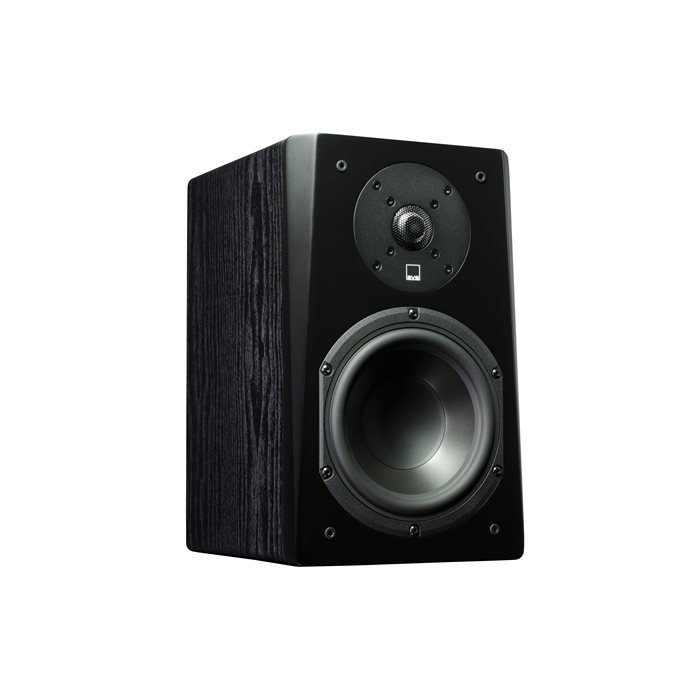 Image: SVS
The one to pick for more bass and an easier load. It's a long-running favorite and the bookshelf speaker in our best bookshelf speakers guide.
Check price on Amazon Prices change often — verify current pricing on Amazon.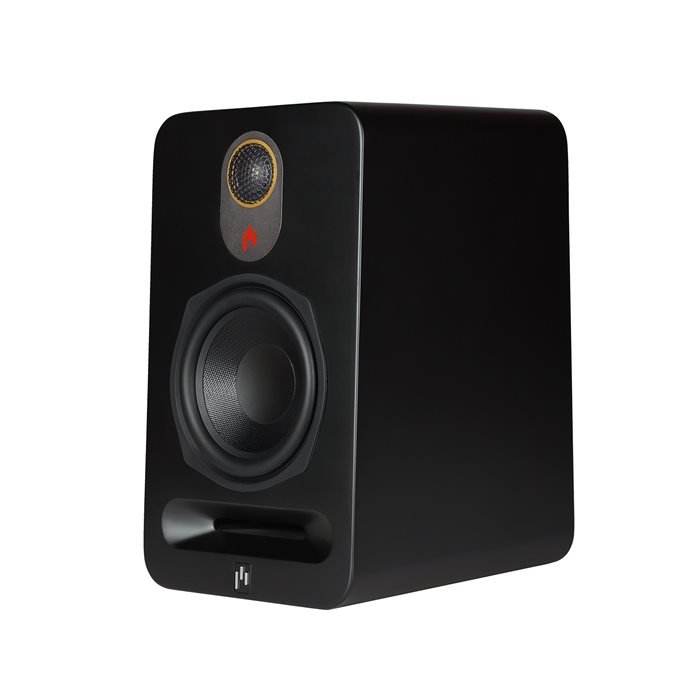 Image: Aperion Audio
The one to pick for a smaller, front-ported speaker with a softer silk-dome tweeter and a treble switch. It measures about 11.8 inches tall and 7.9 inches deep, so it fits most shelves.
Check price at Aperion Audio Prices change often — verify current pricing on the Aperion site.Step-up: the SVS Ultra Evolution Bookshelf (~$1,199 a pair) adds a diamond-coated tweeter and reaches 40 Hz. The Aperion Novus N6B (~$949 a pair) moves to a 6.5-inch woofer at 87 dB.
Tower speakers: Prime Tower vs. Novus N5T
The Prime Tower is a true three-way design, with a 4.5-inch midrange and two 6.5-inch woofers, and it reaches 30 Hz. The Novus N5T is a slimmer two-way tower with two 5.25-inch woofers that reaches 36 Hz, rated at 88 dB and 4 ohms. The SVS goes deeper and has a dedicated midrange for voices. The Aperion is narrower (7 inches wide), a touch more sensitive, and cheaper on sale.
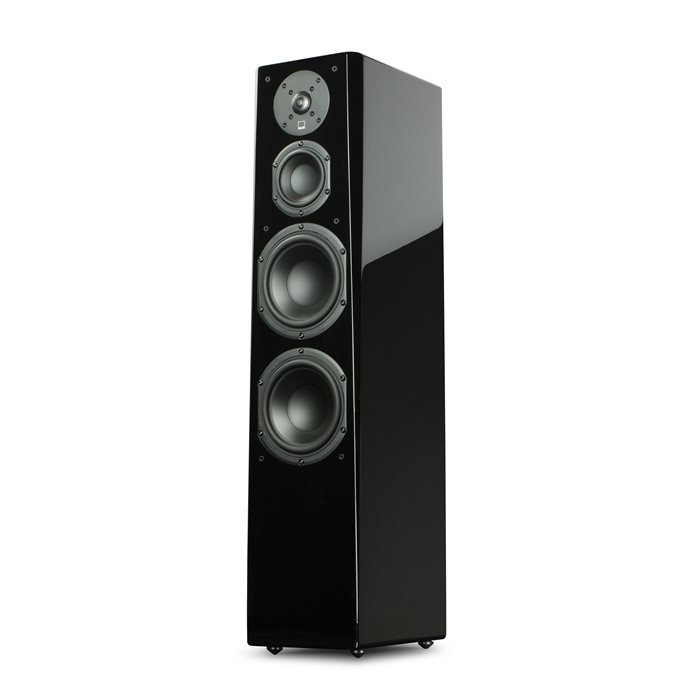 Image: SVS
The one to pick for deeper bass and a dedicated midrange. With a sub, a pair of these anchors a full home theater, and they're full-range enough for music on their own.
Check price on Amazon Prices change often — verify current pricing on Amazon.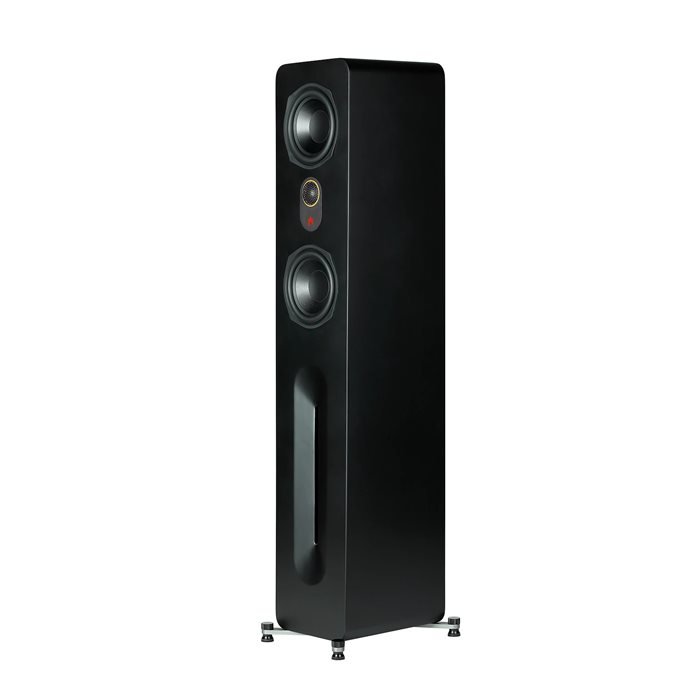 Image: Aperion Audio
The one to pick for a slim tower that's easy to place, with a silk-dome tweeter, a treble switch, and gloss black or white finishes. It's priced per speaker, so double it for a pair.
Check price at Aperion Audio Prices change often — verify current pricing on the Aperion site.Step-up: the SVS Prime Pinnacle (~$799 each) adds a third 6.5-inch woofer and reaches 29 Hz. The Aperion Novus N6T (~$949 each) moves to two 6.5-inch woofers, 32 Hz, and 90 dB sensitivity.
Center channels: Prime Center vs. Novus N5C
These two are close. Both are three-way centers, with a dedicated midrange for dialogue between two 5.25-inch woofers. The Prime Center uses a 3.5-inch midrange and goes deeper (48 Hz vs. 55 Hz). The N5C uses a 4-inch midrange in a sealed, braced cabinet and is a little more sensitive (88 dB vs. 86 dB). The biggest factor is matching: pair a center with front speakers from the same line so voices sound the same as they move across the screen.
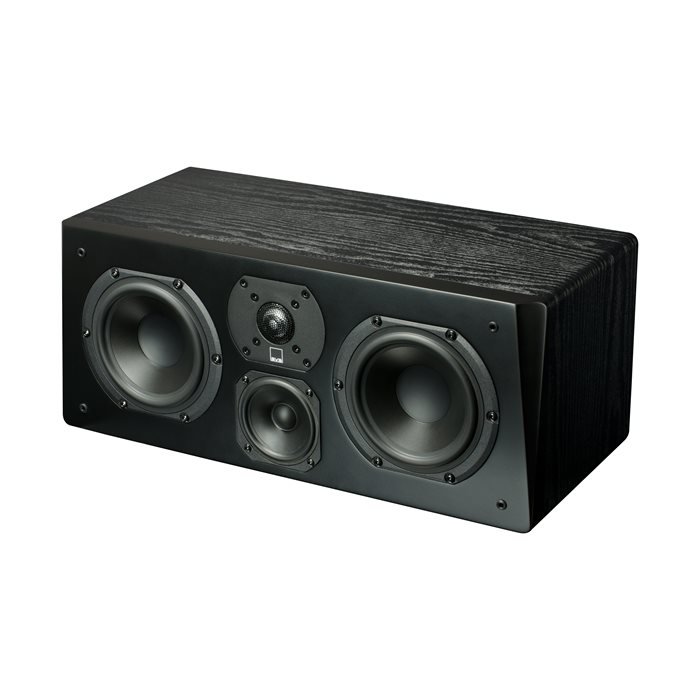 Image: SVS
The match for Prime Bookshelf or Prime Tower fronts, with a dedicated midrange that keeps dialogue clear off-axis.
Check price on Amazon Prices change often — verify current pricing on Amazon.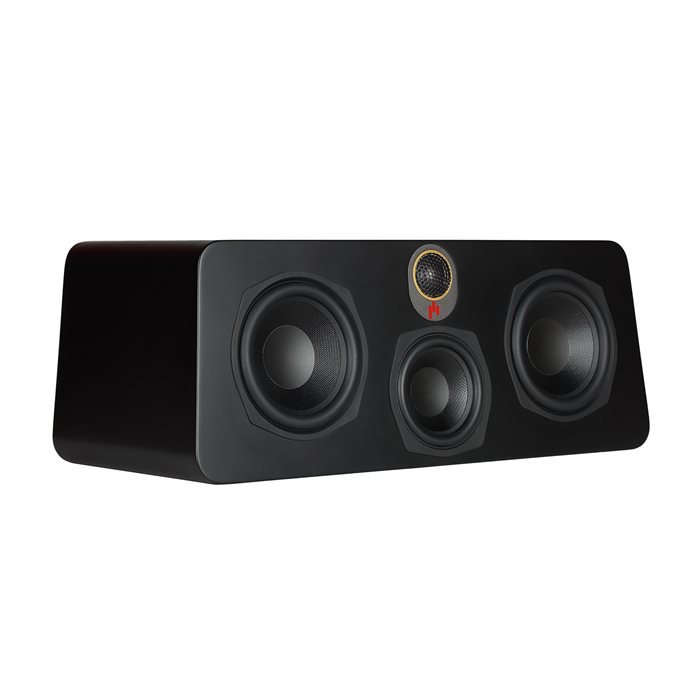 Image: Aperion Audio
The match for N5B or N5T fronts. Its sealed cabinet is about 19 inches wide and 7.3 inches tall, so it fits under most TVs.
Check price at Aperion Audio Prices change often — verify current pricing on the Aperion site.Step-up: at about $800 each, the SVS Ultra Evolution Center and Aperion Novus N6C are direct rivals. We compare them in detail in SVS Ultra Evolution Center vs. Aperion Novus N6C.
Subwoofers: SB-1000 Pro vs. Daedalus DS10
At about $600, the SVS SB-1000 Pro is a compact sealed 12-inch sub with a 325-watt amp and app control. The Aperion Daedalus DS10 is a ported 10-inch sub with a 250-watt amp, a foam plug for sealed mode, and balanced XLR inputs and outputs. Choose the SVS for tight bass and easy tuning from your phone, or the Aperion for ported output and XLR. Our SB-1000 Pro vs. DS10 comparison covers them in depth.
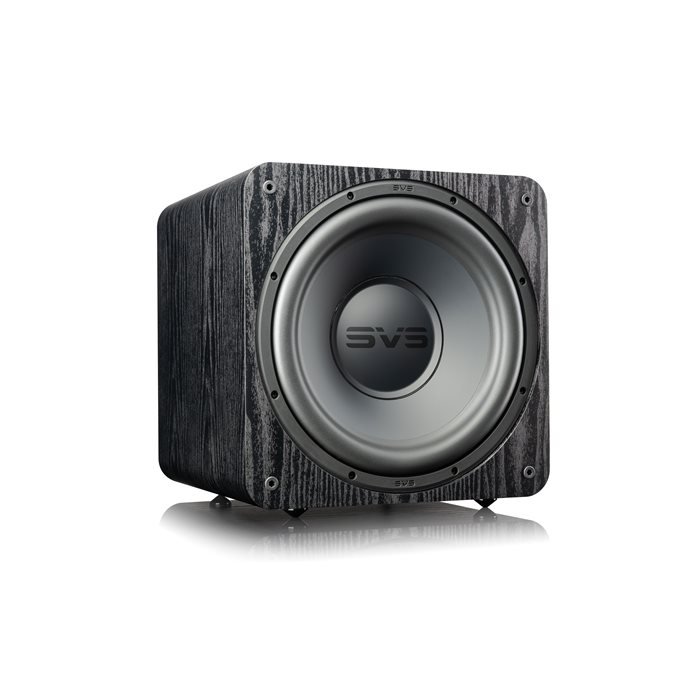 Image: SVS
Our top pick in best subwoofers, and the easiest sub here to tune, with app-based EQ, phase, and room-gain settings.
Check price on Amazon Prices change often — verify current pricing on Amazon.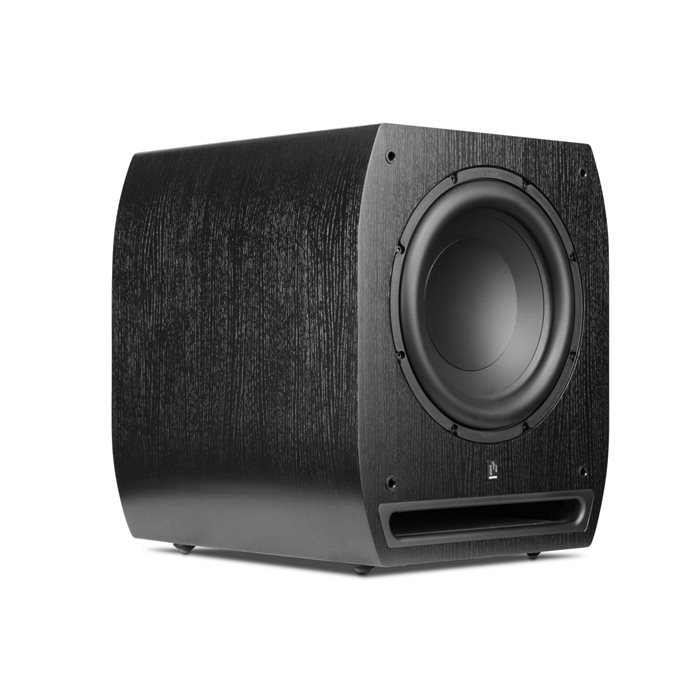 Image: Aperion Audio
The one to pick if you want ported output for movies, balanced XLR connections, or a sub that matches a Novus system.
Check price at Aperion Audio Prices change often — verify current pricing on the Aperion site.Step-up: the ported SVS PB-1000 Pro (~$849) keeps the 325-watt amp and plays deeper, to 17 Hz. The Aperion Daedalus DS12 ($799) moves to a 12-inch driver. Above that, SVS has a much deeper subwoofer lineup, all the way up to its 17-inch Ultra models. See every SVS subwoofer compared.
Atmos height speakers: Prime Elevation vs. Novus A5
The two take different approaches. The SVS Prime Elevation is a small angled speaker made to mount high on a wall or on the ceiling, and it also works as a surround. The Aperion A5 is a coaxial module that sits on top of your front speakers and bounces sound off the ceiling, or it can be wall- or ceiling-mounted. Choose the SVS for true overhead mounting at a lower price, or the A5 if you can't put speakers on the ceiling.
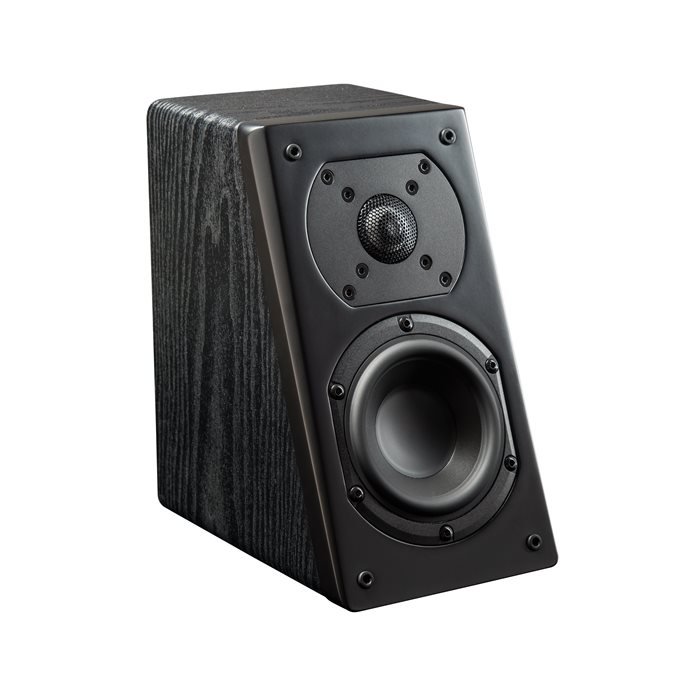 Image: SVS
Its angled cabinet aims sound at your seats from the wall or ceiling, and the same speaker works as a surround.
Check price on Amazon Prices change often — verify current pricing on Amazon.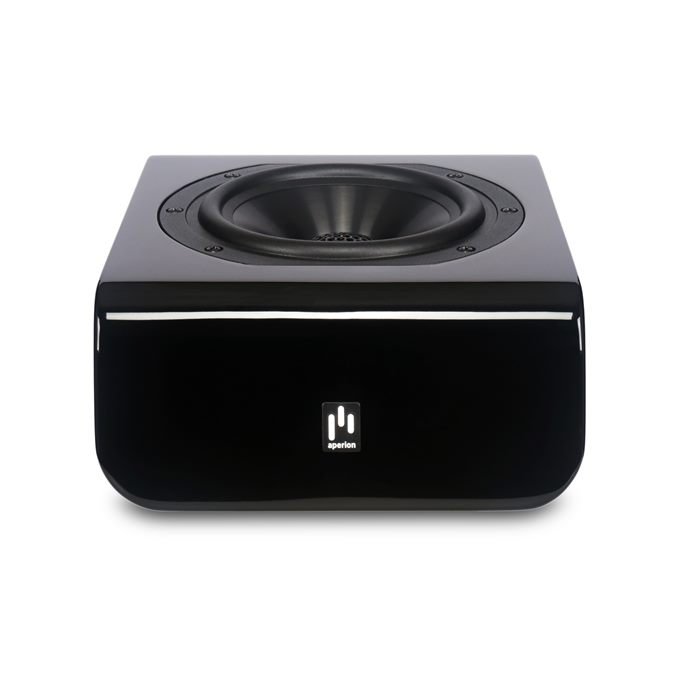 Image: Aperion Audio
The easiest way to add height channels without drilling into the ceiling: set it on top of your front speakers. It also mounts on a wall or ceiling.
Check price at Aperion Audio Prices change often — verify current pricing on the Aperion site.Two matched 5.1 systems
Here's what a value 5.1 system costs from each brand at the prices above, using bookshelf speakers as surrounds:
| Channel | SVS | Aperion Audio |
|---|---|---|
| Front left and right | Prime Tower pair, about $1,200 | Novus N5T pair, about $980 |
| Center | Prime Center, about $350 | Novus N5C, about $350 |
| Surrounds | Prime Bookshelf pair, about $600 | Novus N5B pair, about $420 |
| Subwoofer | SB-1000 Pro, about $600 | Daedalus DS10, about $600 |
| Total | About $2,750 | About $2,350 |
Aperion's total depends on its sales; at full list price the Aperion system costs about $3,100, more than the SVS one. Add a pair of height speakers for 5.1.2 Atmos. If you're unsure how many speakers you need, our home theater setup guide walks through it.
Trials, warranties, and where to buy
Both brands let you try speakers at home. SVS's 45-day trial is longer than Aperion's 30-day audition, and SVS covers shipping both ways when you buy direct. Many SVS models are also sold on Amazon, which can be handy for fast shipping and returns, but the SVS trial applies only to purchases from SVS. Aperion sells direct.
One practical point: Novus speakers are 4-ohm designs. Most mid-range and better receivers handle 4 ohms fine, but a very cheap receiver may run hot at high volume. Our speaker impedance guide explains what to check. SVS Prime speakers are 8 ohms and work with any receiver.
Which brand should you buy?
- Choose SVS for deeper bass from the bookshelf and tower speakers, an 8-ohm load that any receiver can drive, a longer trial, Amazon availability, and a much bigger subwoofer lineup.
- Choose Aperion for a softer silk-dome sound with a treble switch, slimmer towers, lower sale prices on the Novus 5 line, XLR on the subwoofers, and an Atmos module that sits on your front speakers.
- Either way, keep the front left, center, and right from the same brand and line. Mixing brands is fine for surrounds and subwoofers. See our guide to mixing speaker brands.
For every model each brand makes, see our SVS speakers guide and the Aperion picks in our best tower speakers and best bookshelf speakers guides, and every Aperion line in our Aperion Audio speakers guide.