A great home theater is a matched set of specialists, not one speaker doing everything. Bookshelf and floorstanding speakers carry the front stage, a subwoofer handles what they can't, a center channel locks dialogue to the screen, and height speakers add the overhead layer that makes Atmos worth having.
New to any of this? Our 5.1 vs 7.1 vs Atmos guide and speaker placement guide cover how these pieces fit together before you buy.
Small footprint, real sound
The right choice for stands, shelves, or as surrounds in a system that already has floorstanding fronts. The picks below step up into Aperion Audio's direct-to-consumer lineup — the same brand already running our own power amp and banana plugs elsewhere on this site — for readers who want to go further upmarket than the retail options above. Not sure bookshelf is the right call for your room? See our bookshelf vs. floorstanding guide.
Why we picked it: Same Reference Premiere line as our tower, center, and height picks — the larger Tractrix horn, copper-spun Cerametallic woofer, and overall voicing match, so a bookshelf-based system (or bookshelf surrounds paired with towers up front) sounds like one coherent speaker line instead of mismatched parts.
- Drivers: Tractrix horn tweeter, 6.5" Cerametallic woofer
- Best for: A matched Reference Premiere system, or premium surrounds
Why we picked it: Klipsch's next-generation take on the Reference line brings the same horn-loaded sound down to a friendlier price than the Reference Premiere series — a step up from entry-level without the jump to RP pricing.
- Drivers: Horn-loaded tweeter, 5.25" spun-copper woofer
- Best for: A budget-conscious step up from true entry-level speakers
Why we picked it: These are a category of their own — powered bookshelf speakers with a built-in amp, DAC, and Dolby Atmos processing, developed with Onkyo. No receiver, no separate amp, and no soundbar required; just a TV with eARC and a phono input if vinyl's in the mix.
- Drivers: Titanium tweeter on Tractrix horn, 5.25" Jet Cerametallic woofer
- Built-in: Amplification, DAC, Dolby Atmos decoding, phono input
- Best for: A one-box system with real speaker-level sound, no separate electronics
Why we picked it: A sealed, dedicated compartment for the 6.5" woofer keeps midrange and bass clean and uncolored — refined sound and dynamics well beyond the price, whether they're running as fronts, surrounds, or the center of a small stereo system.
- Drivers: 1" aluminum dome tweeter, 6.5" woofer in a sealed sub-enclosure
- Best for: Budget-conscious builds that still want real dynamics
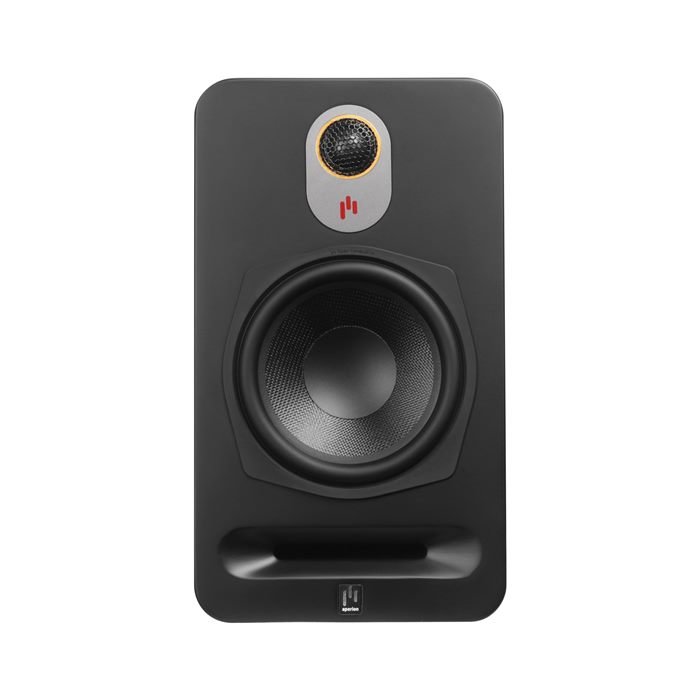
Why we picked it: The entry point into Aperion's own lineup — the same direct-to-consumer brand already running our front three channels through the Energy Pro E3H. A German silk-dome tweeter and an aramid-fiber woofer give it a smoother, less forward voicing than the horn-loaded Klipsch picks above, and buying direct means no dealer markup, plus a 30-day in-home audition none of the retail options above offer.
- Drivers: 1" German silk-dome tweeter, 6.5" aramid-fiber woofer
- Sensitivity: 87dB, 4 ohms
- Best for: A smoother-voiced alternative to horn-loaded bookshelf speakers
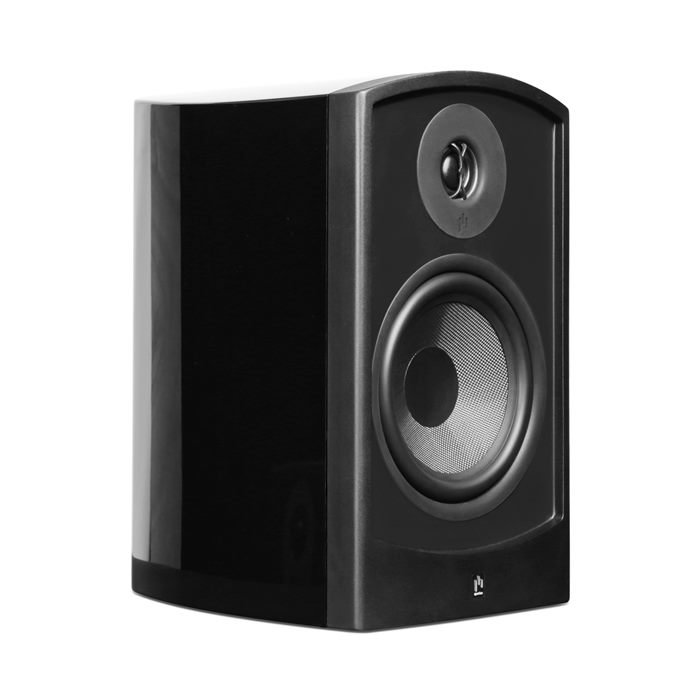
Why we picked it: A step up from a standard 6.5" bookshelf into an 8" Kevlar woofer — closer to tower-level bass extension in a stand-mount cabinet, reaching down to 30Hz. It also looks the part: real high-gloss cherry veneer or piano black lacquer over ultra-thick HDF, not a vinyl wrap. A genuine option for towers-level output without giving up the floor space.
- Drivers: 1.1" ASR silk-dome tweeter, 8" woven Kevlar woofer
- Frequency response: 30Hz–35kHz
- Finish: High-gloss cherry veneer or piano black lacquer
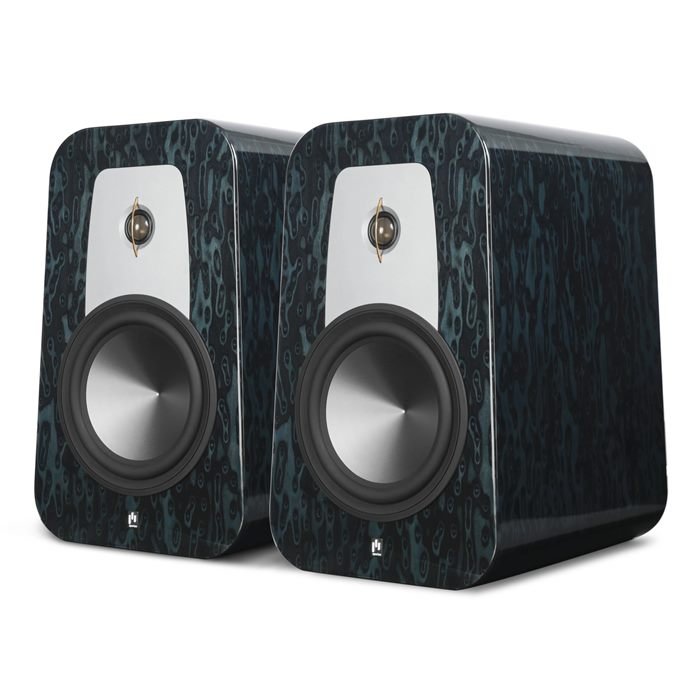
Why we picked it: Aperion's flagship bookshelf speaker, and it's built like one — a silver-foil-capacitor crossover, a Saturn waveguide tweeter for more even off-axis dispersion, and nearly 40 lbs per speaker of internally braced cabinet. This is priced and engineered to compete with genuine reference-tier stand-mounts, not just sit at the top of one brand's lineup.
- Drivers: 1.1" Saturn waveguide silk-dome tweeter, 8" A.F.G. cone woofer
- Frequency response: 30Hz–42kHz
- Finish: Gloss blue opal or rosewood
Full-range front stage
Towers move more air than bookshelf speakers and often need less (or no) subwoofer support for music, though movie soundtracks still benefit from one. As with the bookshelf picks above, the Aperion Audio options below step up into their direct-to-consumer lineup for readers who want to go further upmarket. Weighing the two formats? See our bookshelf vs. floorstanding guide.
Why we picked it: This is the tower in our own 7.2.4 room, and it's the reason — dual 8" Cerametallic woofers, a bigger Tractrix horn for effortless dynamics, and 98dB sensitivity that makes a movie's loudest moments feel physical instead of strained.
- Drivers: Dual 8" Cerametallic woofers, Tractrix horn tweeter
- Sensitivity: 98dB — exceptionally easy to drive
- Power handling: 150W continuous / 600W peak
Why we picked it: Twin 6.5" woofers per tower mean these carry real low-end weight on their own — a genuine option if a subwoofer isn't in the budget or the room yet, from a brand enthusiasts trust for value.
- Drivers: Twin 6.5" woofers, 3.5-way SoundMatch crossover
- Bass: Extends low enough to skip a sub in smaller rooms
- Pairs well with: SVS SB-2000 or SB-1000 Pro for added depth
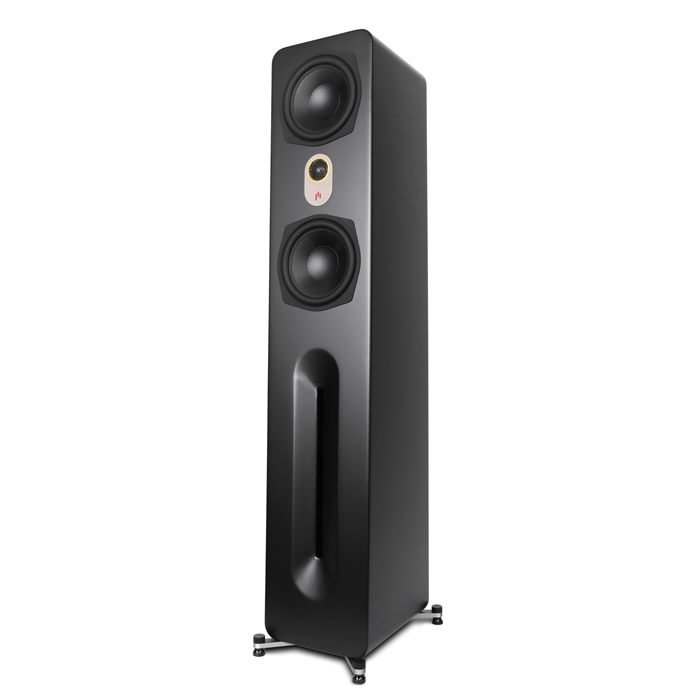
Why we picked it: The tower version of our Aperion bookshelf entry point, and the extra cabinet buys real bass extension — dual 6.5" aramid-fiber woofers reaching down to 32Hz, with 90dB sensitivity that's noticeably easier to drive than the bookshelf model. Same German silk-dome tweeter voicing, same direct-to-consumer pricing and 30-day in-home audition.
- Drivers: 1" German silk-dome tweeter, dual 6.5" aramid-fiber woofers
- Frequency response: 32Hz–30kHz
- Sensitivity: 90dB, 4 ohms
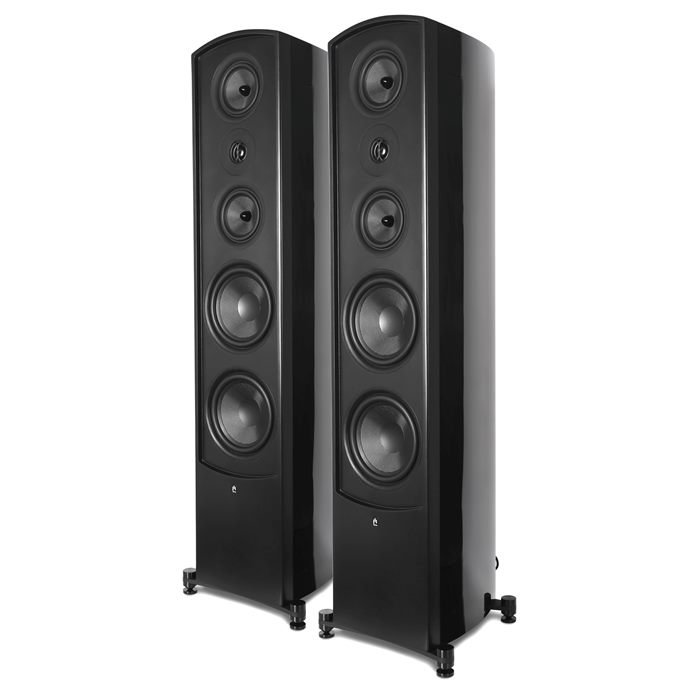
Why we picked it: A genuine 3-way design — dual 8" Kevlar woofers handle bass down to 26Hz while two dedicated 5.25" Kevlar midrange drivers take over before the ASR tweeter, instead of asking one woofer to do both jobs. At 91dB sensitivity and a 500W peak rating, it's built for medium-to-large rooms without strain, in real gloss cherry veneer or piano black.
- Drivers: 1.1" ASR tweeter, dual 5.25" Kevlar midrange, dual 8" Kevlar woofers
- Frequency response: 26Hz–35kHz
- Finish: Gloss cherry veneer or gloss black lacquer
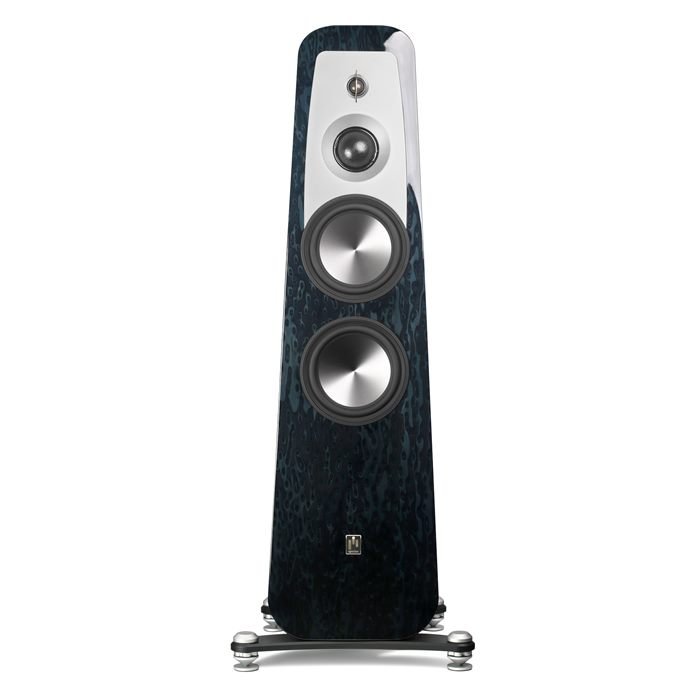
Why we picked it: The tower version of Aperion's flagship, and it's a genuine 3-way — dual 8" A.F.G. woofers, a dedicated 3" soft-dome midrange, and the same Saturn waveguide tweeter as the GR8 bookshelf, in a curved, internally-braced cabinet that weighs 108 lbs per tower. Tri-wireable binding posts and silver-foil crossover capacitors put it in genuine reference territory.
Worth knowing: Aperion lists this one at $5,499 per speaker, not per pair — the listed price on the product page is for a single tower, so budget roughly $11,000 for a stereo pair.
- Drivers: 1.1" Saturn waveguide tweeter, 3" soft-dome midrange, dual 8" A.F.G. woofers
- Frequency response: 28Hz–42kHz
- Finish: Rosewood opal or blue opal gloss veneer
The channel every other speaker relies on
Placement matters more than which sub you buy — see our subwoofer placement guide after picking one. Aperion's lineup below spans everything from an entry-level ported sub to an ultra-slim dual-15" cinema sub built to hide behind an acoustically transparent screen.
Why we picked it: A 12" driver in a compact sealed cabinet, backed by a genuinely powerful 325W RMS amp and an app for real DSP tuning — sealed subs also tend to blend more evenly into a room than ported designs of similar size.
- Driver: 12" high-excursion, sealed cabinet
- Amplifier: 325W RMS / 820W+ peak Sledge amp
- Control: SVS DSP smartphone app
Why we picked it: A 10" spun-copper woofer and an all-digital amp deliver real weight for well under most subwoofer budgets — the obvious first sub for a 5.1 system that's currently missing one entirely.
- Driver: 10" front-firing spun-copper woofer
- Amplifier: 150W continuous / 300W peak, all-digital
- Controls: RCA/LFE input, adjustable bass controls
Why we picked it: A 12" high-excursion Cerametallic woofer and an 800W Class D amp give it real headroom for large rooms and bass-heavy action scenes — the step up once a 10" sub starts running out of gas.
- Driver: 12" front-firing high-excursion Cerametallic woofer
- Amplifier: 800W Class D
- Cabinet: Aerofoil front slot port for reduced turbulence noise
- Best for: Larger rooms or dedicated home theaters wanting reference-level output
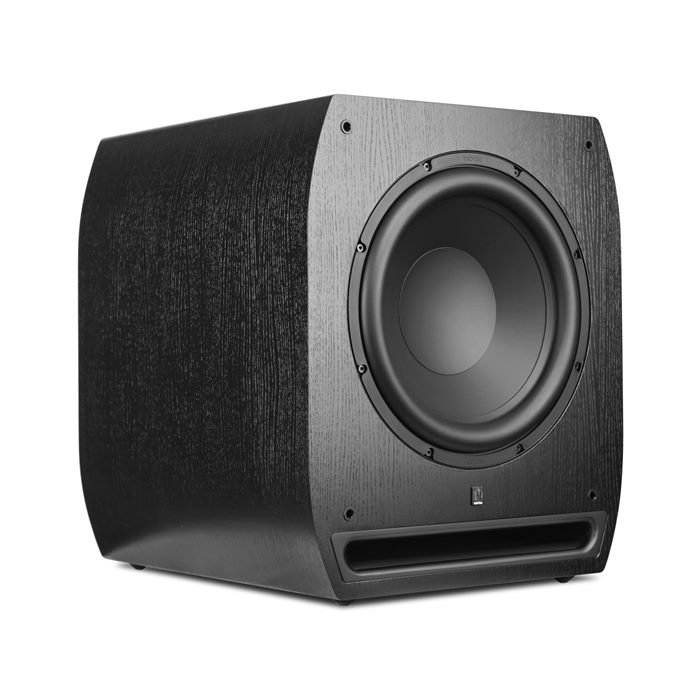
Why we picked it: A straightforward, well-built entry point into Aperion's own subwoofer lineup — a 12" high-excursion driver, a 250W/500W Class D amp, and both RCA and balanced XLR inputs most subs at this price skip entirely. A foam port plug lets you switch between ported (more output) and sealed (tighter, more accurate) response to match your room.
- Driver: 12" high-excursion, front-ported (switchable to sealed)
- Amplifier: 250W RMS / 500W peak Class D
- Connectivity: RCA and balanced XLR in/out, phase and crossover controls
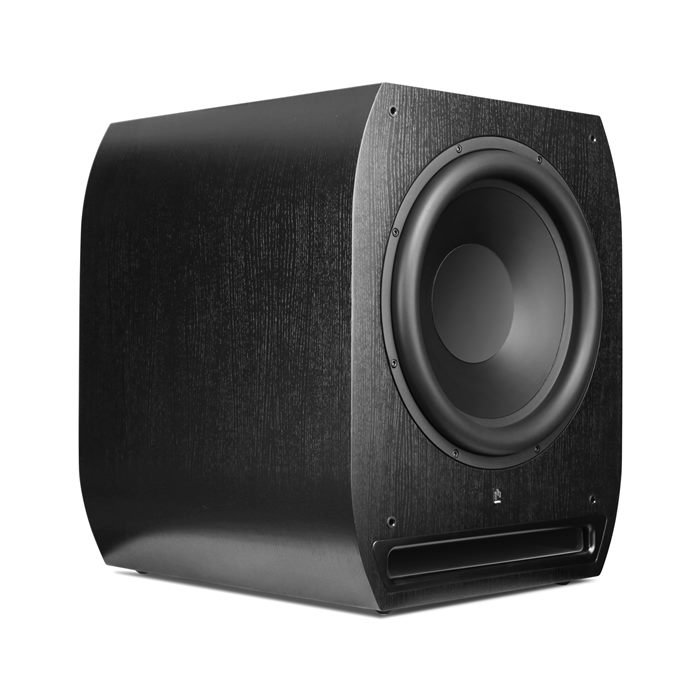
Why we picked it: Same design as the DS12, scaled up — a 15" driver and a 550W/1100W amp reach down to 18Hz, with the same switchable ported/sealed mode and RCA/XLR connectivity. The step up once a 12" sub starts running out of headroom in a larger room.
- Driver: 15" high-excursion, front-ported (switchable to sealed)
- Amplifier: 550W RMS / 1100W peak Class D
- Frequency response: 18Hz–195Hz
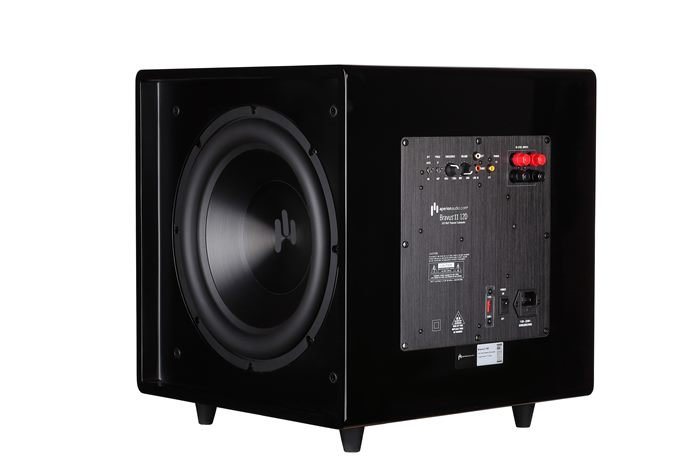
Why we picked it: A down-firing 12" active driver paired with dual 12" side-firing passive radiators packs real output into a sealed cabinet without the size of a comparably powerful ported design. A 650W amp and a sealed enclosure trade a little peak output for tighter, more controlled bass, and it's the only sub on this page available in gloss cherry or piano black instead of plain vinyl-wrap black.
- Driver: 12" active (down-firing) + dual 12" passive radiators
- Amplifier: 650W RMS / 1300W peak Class D, sealed enclosure
- Finish: Stealth Black, Gloss Black, Gloss Cherry, or Pure White
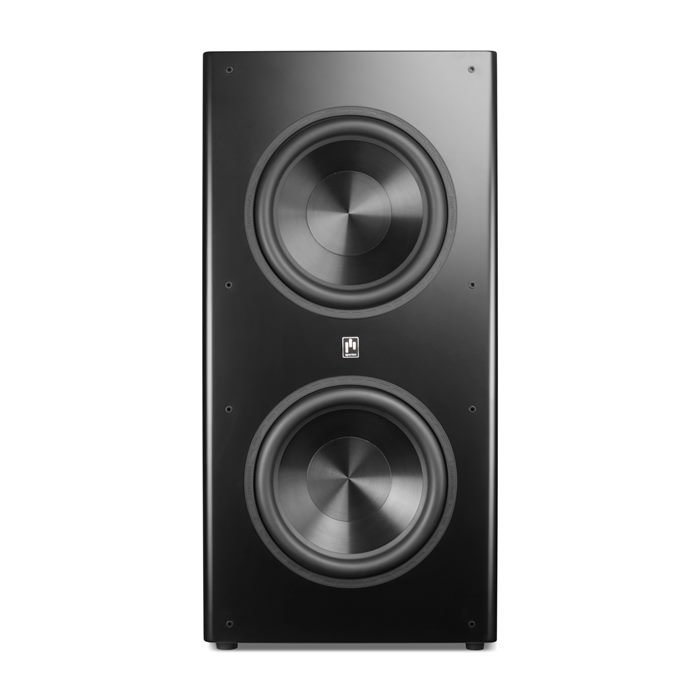
Why we picked it: Dual 15" aluminum-magnesium drivers and a 1,300W/2,600W ICEpower amplifier module put this in genuine reference territory, but the real trick is the cabinet — just 11.8" deep, purpose-built to sit flush behind an acoustically transparent projection screen without eating up floor space. Multi-sub capable with balanced XLR in/out for anyone running more than one.
- Driver: Dual 15" aluminum-magnesium alloy, sealed
- Amplifier: 1,300W RMS / 2,600W peak Class D ICEpower
- Depth: 11.8" — built for behind-screen placement
Where your dialogue actually lives
Most of a movie's dialogue comes from this one speaker — matching it to your fronts matters more here than anywhere else in the system. As with the bookshelf and tower picks above, the Aperion options below are matched to their own Novus and Verus lines, for anyone building a system around those instead.
Why we picked it: Same Tractrix horn and Cerametallic woofer technology as the RP-8000F II towers, so dialogue tone matches the rest of the front stage instead of sounding like a different speaker took over mid-scene.
- Drivers: Tractrix horn tweeter, dual 5.25" Cerametallic woofers
- Best for: Matching an RP-series tower or bookshelf front stage
Why we picked it: SVS's flagship 3-way reference center — a curved front baffle time-aligns the tweeter and midrange, and diamond carbon-coated tweeters push detail well past what most center channels offer. Worth comparing against the RP-504C II if your fronts aren't already Klipsch.
- Drivers: 3-way design, diamond carbon-coated aluminum dome tweeter, curved time-aligned baffle
- Best for: Reference-quality dialogue in a system not already built around Klipsch's Tractrix/Cerametallic sound
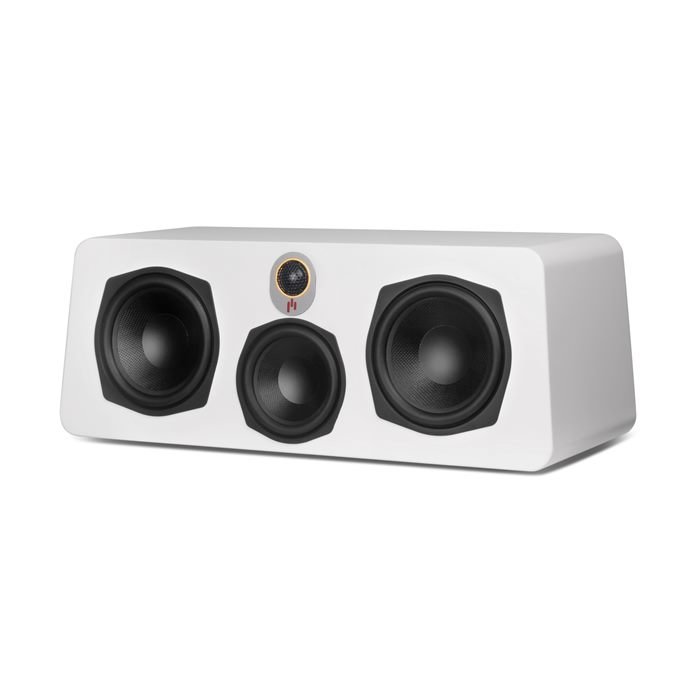
Why we picked it: Voice-matched to the Novus N6B and N6T above — same German silk-dome tweeter, same aramid-fiber cone material — so dialogue doesn't shift character when the mix pans between the center and front stage. A dedicated 4" midrange handles the vocal range instead of asking the dual 6.5" woofers to cover it, a genuine 3-way layout at this price.
- Drivers: 1" German silk-dome tweeter, 4" aramid-fiber midrange, dual 6.5" aramid-fiber woofers
- Frequency response: 50Hz–30kHz
- Best for: Matching a Novus N6B or N6T front stage
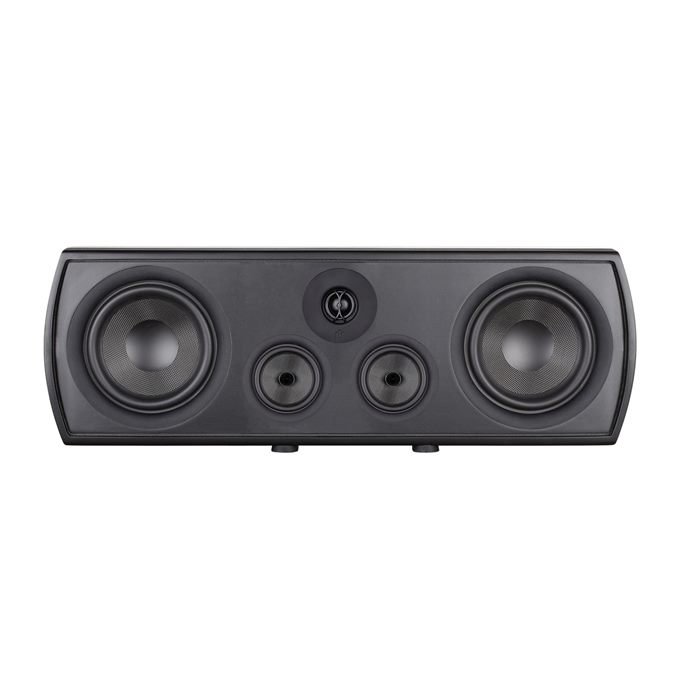
Why we picked it: The center-channel match for the Verus V8B and V8T — dual 8" Kevlar woofers and dual 4" Kevlar midrange drivers around the same ASR tweeter, at 92dB sensitivity. A vertical tweeter-midrange array keeps dialogue consistent across a wider listening area than a typical single-midrange center, and it comes in the same gloss cherry or piano black finish as the rest of the line.
- Drivers: 1.1" ASR tweeter, dual 4" Kevlar midrange, dual 8" Kevlar woofers
- Frequency response: 35Hz–35kHz
- Best for: Matching a Verus V8B or V8T front stage
The overhead layer
See our 5.1 vs 7.1 vs Atmos guide for exactly how many of these you actually need, and our in-ceiling vs. up-firing guide for which approach below actually fits your ceiling. The Aperion options span the full range — a dedicated tripolar surround, a compact up-firing module, a versatile wall/ceiling speaker, and a true in-ceiling speaker.
Why we picked it: One speaker, three jobs — a flip of the crossover switch turns this into an upward-firing Atmos module, a dedicated ceiling-style height speaker, or a standard rear surround, so it fits whichever configuration from our Atmos guide you land on.
- Modes: Switchable Atmos up-firing / surround
- Best for: Adding a .2 or .4 height layer to an existing 5.1 or 7.1 system
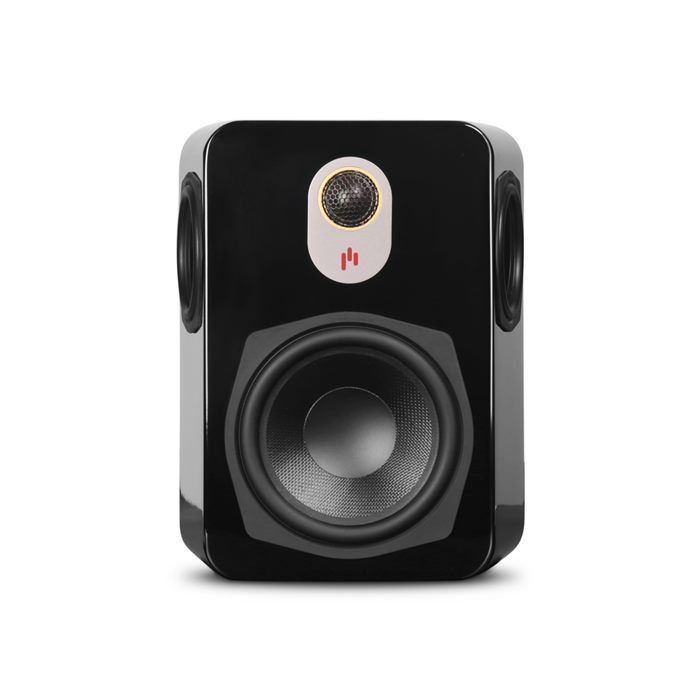
Why we picked it: A genuine tripolar design — the tweeter fires forward while two 4" full-range drivers fire to the sides, spreading surround effects into a diffuse field around the room instead of pinpointing a speaker location, the classic THX approach to side and rear surrounds. Wall-mountable or tabletop, and voice-matched to the rest of the Novus line above.
- Drivers: 1" German silk-dome tweeter, dual 4" aluminum-cone full-range, 6.5" aramid-fiber woofer
- Design: 3-way tripolar (forward + side-firing)
- Best for: Diffuse side or rear surrounds in a Novus-based system
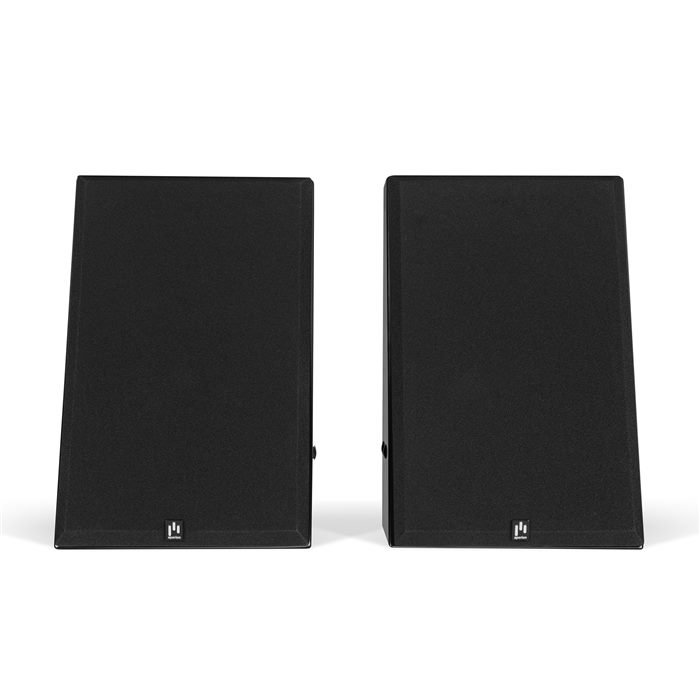
Why we picked it: An AMT (Air Motion Transformer) tweeter is a genuine step up from the dome tweeters on every other speaker on this page — faster, more detailed, and more common on speakers well above this price. A 16-degree sloped baffle is built specifically to aim sound down at the listening position when wall-mounted for Atmos height duty, and it works equally well ceiling-mounted or as a standard surround.
- Drivers: AMT tweeter, 6.5" German Propex Curv cone woofer
- Mounting: Wall (sloped baffle for height aiming) or ceiling
- Best for: Readers who want one speaker to cover height, ceiling, or surround duty
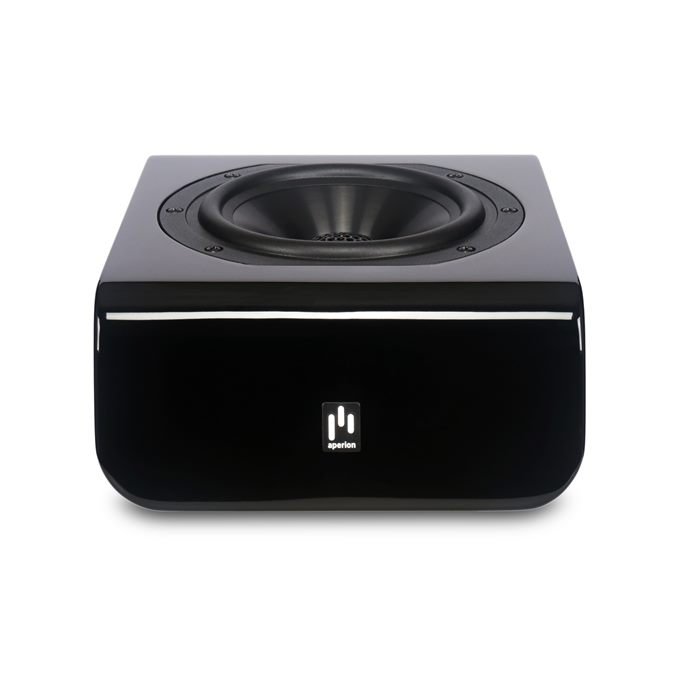
Why we picked it: The compact, budget-friendly entry into Aperion's height lineup — a small coaxial 2-way module meant to sit directly on top of existing towers or bookshelf speakers (or mount to a wall or ceiling instead), the same reflective/up-firing role as the Klipsch pick above, just from the brand already running the rest of this system.
- Drivers: 1" silk-dome tweeter, 5.25" aluminum-cone woofer (coaxial)
- Mounting: Atop main speakers, wall, ceiling, or desktop
- Best for: Adding Atmos height to an existing Novus or Verus front stage
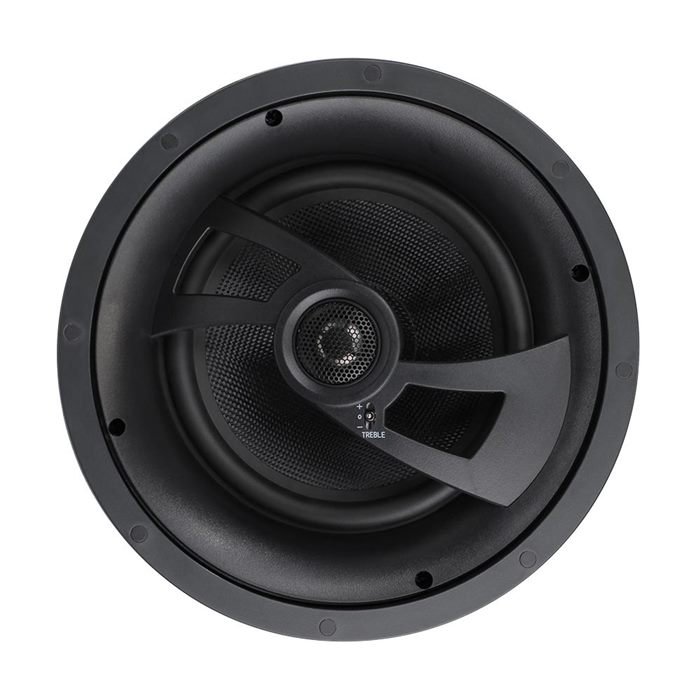
Why we picked it: Unlike a flat, direct-firing ceiling speaker, both the tweeter and 8" woofer here are pre-angled 15 degrees toward the listening position — Aperion specifically builds this one for Atmos-compatible home theaters rather than general whole-house audio. A titanium dome tweeter and a treble-adjustment switch round it out for a genuine in-ceiling height channel rather than a repurposed background speaker.
- Drivers: 1" titanium-dome tweeter, 8" woven-fiberglass woofer, both angled 15°
- Cutout: 10.08" round, 5.99" deep
- Best for: A true in-ceiling Atmos height channel
Priced and sold per speaker — a .2 or .4 height layer needs 2 or 4.
Head-to-head comparisons
Torn between two of our picks? These side-by-side breakdowns show what the extra money actually buys.
Get the setup right
Frequently asked questions
Not sure how many speakers you actually need, or what the numbers like 7.1.4 mean?
5.1 vs 7.1 vs Atmos guide →Bought the speakers — now where do they actually go in the room?
Speaker placement guide →Subwoofer placement follows completely different rules than every other speaker.
Subwoofer placement guide →Building your front stage from one brand and your surrounds from another? Here's where that's fine and where it isn't.
Can you mix speaker brands? →