Every subwoofer is either sealed or ported, and that one design choice affects how loud it plays, how deep it goes, how big it is, and where it can go. Here's how to choose.
Choose sealed for music, small and medium rooms, and anywhere the sub has to be compact or close to a wall. Sealed subs give tight, controlled bass and blend easily.
Choose ported for movies and large rooms. For the same driver and amp, a ported sub plays louder and deeper, but its cabinet is bigger and its ports need room to breathe.
What's the difference?
A sealed subwoofer (also called acoustic suspension) has an airtight cabinet. The air trapped inside acts like a spring behind the driver, which keeps the cone under tight control. A ported subwoofer (also called bass reflex or vented) has one or more tubes, called ports, that open to the outside. At a specific low frequency, the air in the port resonates and adds its own output to the driver's, which makes the sub louder and deeper for the same driver and amplifier.
That one design choice drives every other difference: size, output, how the bass rolls off, and where the sub can go.
Sealed vs. ported at a glance
| Sealed | Ported | |
|---|---|---|
| Deep-bass output | Lower | Higher, often by 5 dB or more near the port tuning |
| Cabinet size | Smaller | Larger for the same driver |
| Roll-off below tuning | Gentle (12 dB per octave) | Steep (24 dB per octave) |
| Sound | Tight, controlled, quick | Deeper and more forceful |
| Best for | Music, small and medium rooms | Movies, large rooms |
| Placement | Flexible, can go close to walls | Needs clearance in front of the ports |
| Port noise | None | Possible at extreme volume in budget designs |
Why choose a sealed sub
Sealed subs roll off gradually as frequency drops. That gentle slope works well with room gain, the natural bass boost that small and medium rooms add at the lowest frequencies. The result is often deeper in-room bass than the spec sheet suggests, and a smooth blend with your main speakers.
Sealed designs also stop and start quickly, which is why they're associated with tight, articulate bass. That suits music with fast bass lines and kick drums. And because they're compact and have no port, they fit beside furniture and close to walls more easily.
The downside is output. A sealed sub needs more amplifier power and cone movement to reach the same volume as a ported sub, so in a large room or at very loud movie levels it runs out of headroom sooner.
Why choose a ported sub
The port adds output where it's hardest to get: the deep bass under 40 Hz that carries explosions, engines, and rumble in movies. For the same driver and amp, a ported sub plays louder and lower. SVS's own numbers show this clearly: its ported PB-1000 Pro is about 7 dB louder at 30 Hz than the sealed SB-1000 Pro, which uses the same driver and amplifier.
The costs are a larger cabinet, a steeper roll-off below the port's tuning frequency, and the need to leave the port room to breathe. That matters most with rear-ported subs like Klipsch's R-100SW, R-101SW, and R-121SW: keep some space between the port and the wall, and expect the distance to change how much bass you hear. Cheaper ported subs can also produce "chuffing," a rushing-air noise from the port at high volume. Well-designed ports are flared to prevent it.
Port plugs: the best of both
Some ported subwoofers ship with foam port plugs that turn them into sealed subs. Aperion's Daedalus DS10, DS12, and DS15 include them, and SVS's PB-1000 Pro has a Sealed mode in its app for use with the ports plugged. Plugging the port gives you tighter bass and gentler roll-off at the cost of output. It's a useful option for a room you use for both music and movies, though you still live with the larger cabinet.
Which is right for your room?
- Small room, apartment, or mostly music: sealed. It blends easily, fits anywhere, and room gain fills in the deepest bass.
- Large or open-plan room, mostly movies: ported. You'll want the extra output to fill the space.
- Medium room, a mix of both: either works. A ported sub with port plugs, or two sealed subs, gives you flexibility.
- Several seats: consider two smaller subs of either type. Two subs placed apart smooth out bass across more seats than one big one. See our subwoofer placement guide.
Whichever you choose, set the phase and crossover carefully. Our subwoofer phase guide shows how.
Good sealed and ported subwoofers
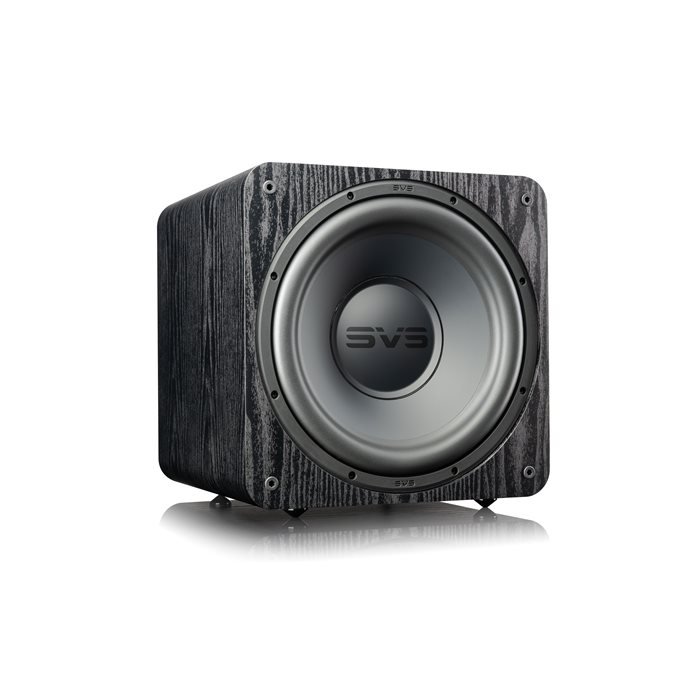 Image: SVS
A compact 12-inch sealed sub with an app for EQ, phase, and room-gain settings. It's the top pick in our best subwoofers guide.
Check price on Amazon Prices change often — verify current pricing on Amazon.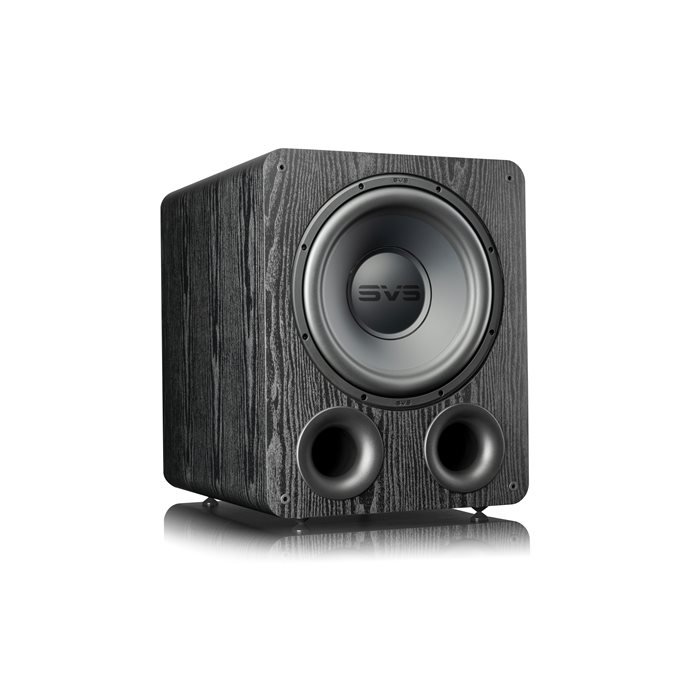 Image: SVS
The ported version of the SB-1000 Pro, with the same driver and amp in a bigger cabinet. It plays deeper and louder for movies. Our SB-1000 Pro vs. PB-1000 Pro comparison covers the tradeoff.
Check price on Amazon Prices change often — verify current pricing on Amazon.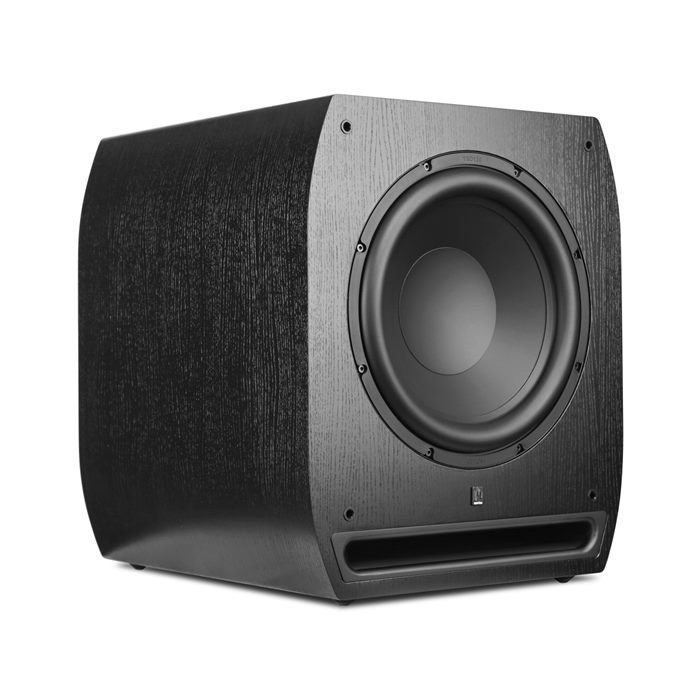 Image: Aperion Audio
A front-ported 12-inch sub that ships with a port plug, so you can run it sealed for music. Sold direct with a 30-day in-home audition.
Check price at Aperion Audio Prices change often — verify current pricing on the Aperion site.Klipsch's current 12-inch Reference sub. The port fires out the back, so it needs some breathing room from the wall, while the driver faces forward. There's no port plug. The 10-inch R-101SW (~$550) uses the same design with a 150W amp. Both are in our best subwoofers guide.
Check price on Amazon Prices change often — verify current pricing on Amazon.Not sure which sub to get? Our Subwoofer Matcher recommends how many subwoofers, what size, sealed or ported, and where to set the crossover for your room.