The SVS SB-1000 Pro and Aperion Daedalus DS10 cost almost exactly the same and are both sold with an in-home trial. One is a sealed 12-inch sub with an app; the other is a ported 10-inch sub with balanced XLR connections.
Buy the SVS SB-1000 Pro (~$599) for tight, controlled bass from a compact box and easy tuning from the SVS app, including EQ and room-gain settings.
Buy the Aperion Daedalus DS10 ($599) if you want ported impact for movies, XLR inputs and outputs, or a sub that matches Aperion Novus speakers.
Specs side by side
These two cost almost exactly the same and take very different routes to good bass. SVS uses a bigger 12-inch driver in a small sealed box with app-based tuning. Aperion uses a 10-inch driver in a ported cabinet with old-school knobs and balanced XLR connections.
| SVS SB-1000 Pro | Aperion Daedalus DS10 | |
|---|---|---|
| Price | ~$599 (black ash) | $599 |
| Cabinet | Sealed | Front-ported, braced; foam plug for sealed mode |
| Driver | 12" | 10" paper composite |
| Amplifier | 325W RMS, 820W+ peak | 250W RMS, 500W peak (Class D) |
| Frequency response | 20–270 Hz ±3 dB | 20–195 Hz |
| Size (H × W × D) | 13.5 × 13 × 14.8 in | 15.8 × 13.4 × 14.8 in |
| Weight | 26 lb | 40 lb |
| Inputs | RCA line level, speaker level | RCA and XLR, with outputs for a second sub |
| Controls | SVS app: 3-band EQ, phase, polarity, room gain | Knobs: volume, crossover (40–160 Hz or LFE), phase 0–180° |
| How it's sold | SVS direct and retailers, including Amazon | Direct from Aperion Audio |
| Trial | 45 days (SVS direct) | 30-day in-home audition |
Specs are from SVS's and Aperion Audio's product pages. Prices are list prices and change often.
Sealed 12" vs. ported 10"
On paper, the SB-1000 Pro has the bigger driver and the stronger amp. A 12-inch cone moves more air than a 10-inch one, and 325 watts beats 250. But the DS10's port helps it back: a ported cabinet gets extra output around its tuning frequency, which is how a 10-inch sub keeps up with a 12-inch sealed one in the deep bass that movies lean on.
The tradeoff is the usual one. The SB-1000 Pro's sealed box is the tighter, more controlled design and the easier one to blend in a small room. The DS10's port favors output and impact at the cost of some tightness, and it needs a little clearance in front so the port can breathe. Aperion includes a foam port plug, though, so you can run the DS10 sealed for tighter bass in a small room or for music. Our sealed vs. ported guide explains the difference.
App vs. knobs, and the XLR question
The SB-1000 Pro's biggest practical advantage is its app. From your seat, you can adjust crossover, phase, polarity, and volume, use a 3-band parametric EQ to tame a room peak, and set room gain compensation. That makes it much easier to dial in, especially with the sub tucked behind furniture.
The DS10 sticks to rear-panel knobs, including a continuous 0–180° phase control. What it adds is balanced XLR inputs and outputs. That's useful for long cable runs, for pro-style setups, and for adding a second sub later: you can daisy-chain a second DS10 from its outputs. See our subwoofer phase guide for how to set either one.
Buying, trials, and looks
The DS10 is sold only by Aperion, direct, with a 30-day in-home audition. The SB-1000 Pro is sold by SVS with a 45-day trial and a 5-year warranty, and also through retailers, including Amazon. Both companies let you hear the sub in your own room before you commit, which matters more for a subwoofer than for almost any other speaker.
Physically, they're close in footprint. The DS10 is a couple of inches taller and much heavier at 40 pounds, with a black oak veneer finish. The SB-1000 Pro comes in black ash or piano gloss black.
Which one should you buy?
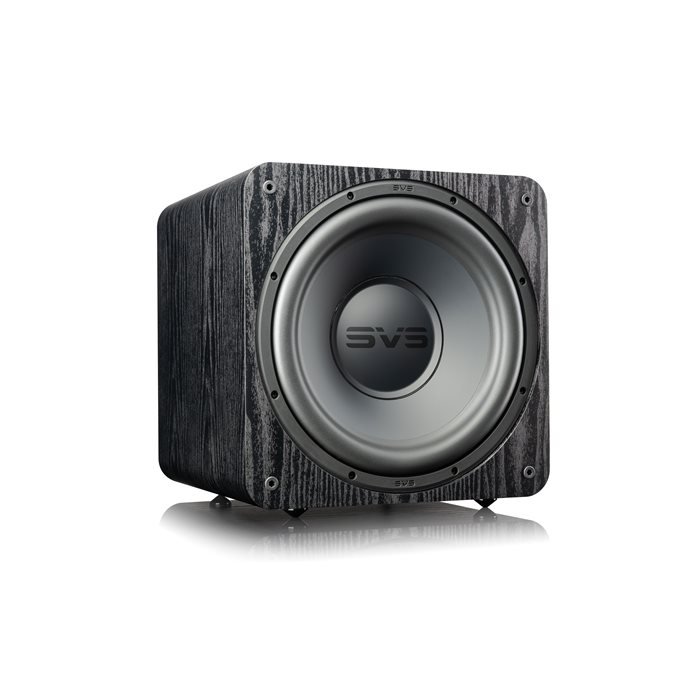 Image: SVS
Buy it if you want the bigger driver, tight sealed bass, and an app that makes setup easy. It's the top pick in our best subwoofers guide.
Worth knowing: there are no XLR connections, and at very loud movie volumes in a big room it runs out of headroom.
Check price on Amazon Prices change often — verify current pricing on Amazon.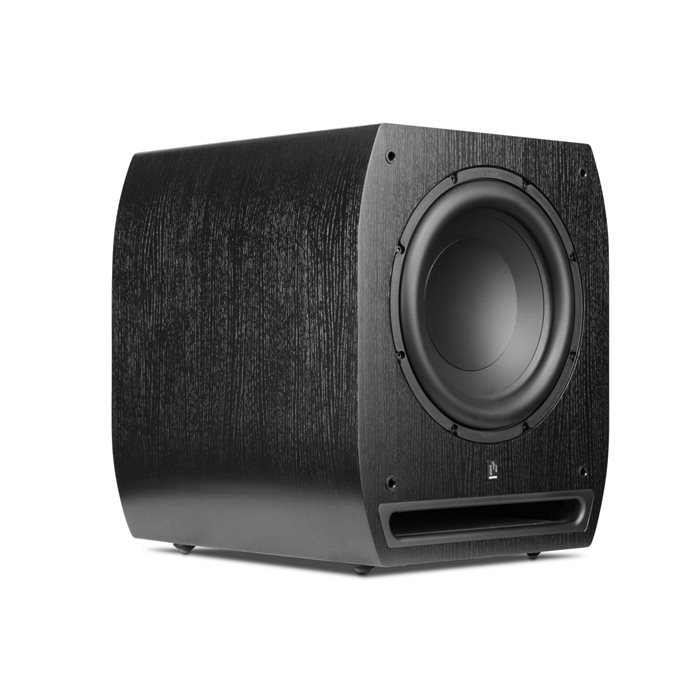 Image: Aperion Audio
Buy it if you want a solidly built ported sub that can also run sealed with its foam plug, balanced XLR connections, and a straightforward set of knobs. It pairs naturally with Aperion's Novus speakers, and the 30-day audition takes the risk out of trying it.
Worth knowing: there's no app or room EQ, so you'll rely on your receiver's room correction for fine-tuning.
Check price at Aperion Audio Prices change often — verify current pricing on the Aperion site.Want more output from SVS? Our SB-1000 Pro vs. PB-1000 Pro comparison covers the ported version. Aperion's bigger Daedalus DS12 and DS15 are in our best subwoofers guide. If you have Klipsch Reference speakers and want a matching sub at this price, the 12-inch Klipsch R-121SW (~$650) is a ported alternative with a smaller amp (200W continuous).