The best Dolby Atmos speaker for most systems is the Klipsch Reference Premiere RP-500SA II. A crossover switch turns it into an up-firing Atmos module, a ceiling-style height speaker, or a standard surround.
For true in-ceiling Atmos, Aperion's Clearus C8C angles both drivers 15 degrees toward the seats (see all seven picks in our best in-ceiling speakers). For a compact up-firing module that sits on your existing speakers, the Aperion A5.
-
Best add-on height speakerKlipsch Reference Premiere RP-500SA IICheck price on Amazon
-
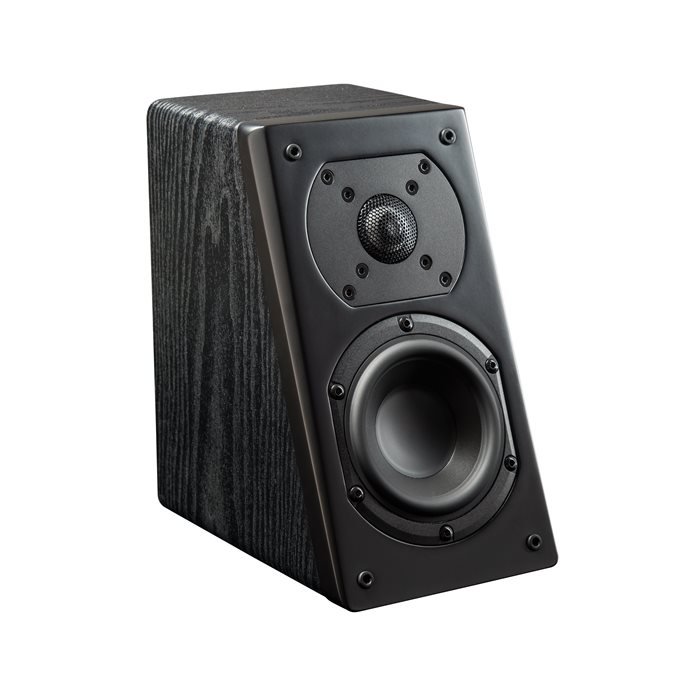 Best angled height speakerSVS Prime ElevationCheck price at SVS
-
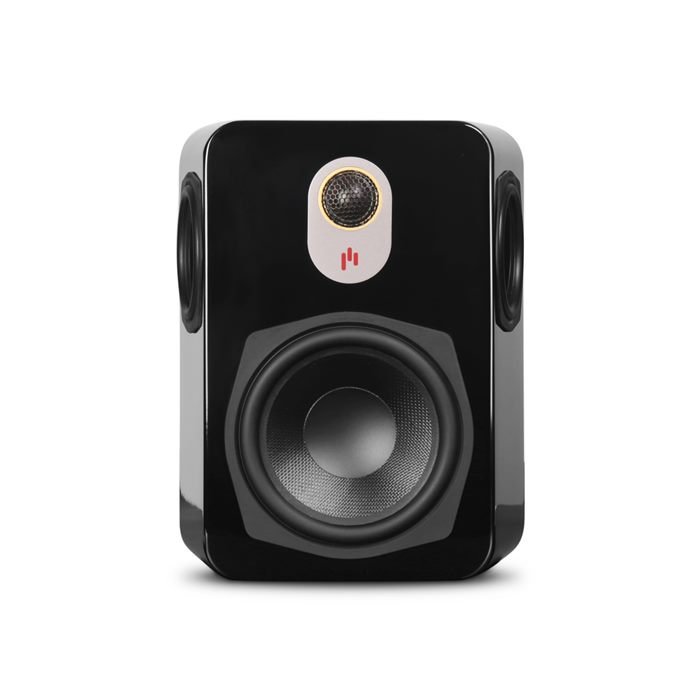 Best Aperion surroundAperion Audio Novus N6SSCheck price at Aperion Audio
-
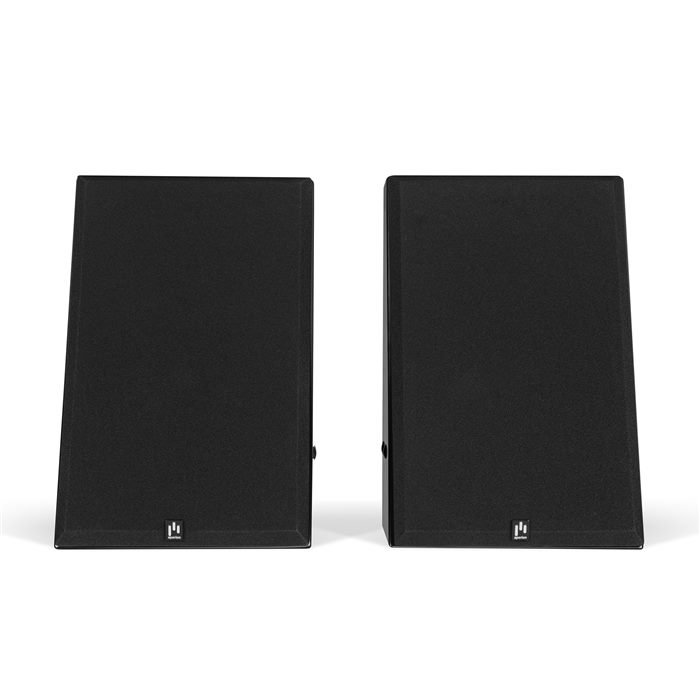 Best versatile height/ceilingAperion Audio Theatrus TC65Check price at Aperion Audio
-
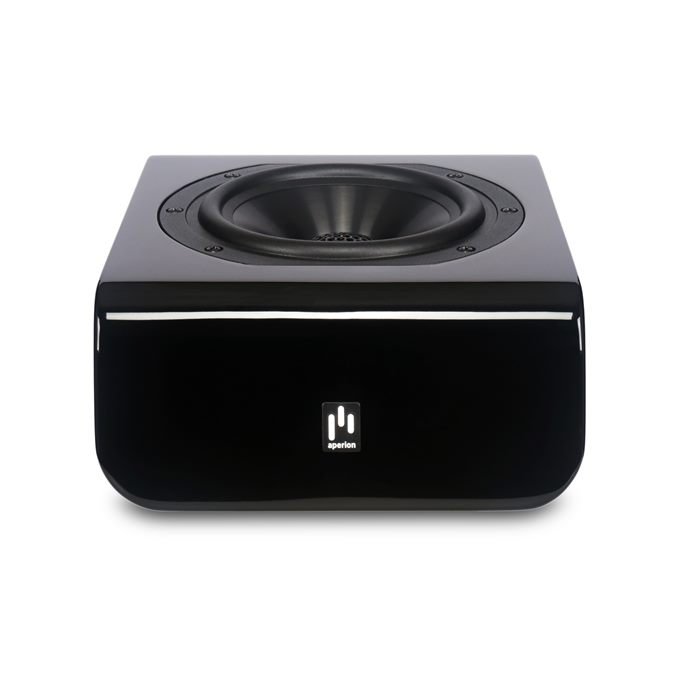 Best compact Atmos moduleAperion Audio A5 Atmos Height SpeakerCheck price at Aperion Audio
Tap a name to jump to the full write-up. Images: SVS, Aperion Audio.
The overhead layer
See our 5.1 vs 7.1 vs Atmos guide for exactly how many of these you actually need, and our in-ceiling vs. up-firing guide for which approach below actually fits your ceiling. The Aperion options span the full range — a dedicated tripolar surround, a compact up-firing module, a versatile wall/ceiling speaker, and a true in-ceiling speaker.
Why we picked it: One speaker, three jobs — a flip of the crossover switch turns this into an upward-firing Atmos module, a dedicated ceiling-style height speaker, or a standard rear surround, so it fits whichever configuration from our Atmos guide you land on.
- Modes: Switchable Atmos up-firing / surround
- Best for: Adding a .2 or .4 height layer to an existing 5.1 or 7.1 system
Image: SVSWhy we picked it: An angled two-way cabinet designed to mount high on a wall or on the ceiling and point sound toward the listening area, which helps height effects seem to come from above and in front of you. It doubles as a surround and matches SVS Prime systems. The premium Ultra Evolution Elevation is in our SVS speakers guide.
- Drivers: 1" aluminum dome tweeter, 4.5" woofer
- Response: 55 Hz–25 kHz, 87 dB, 8 ohms
- Finishes: Black ash, piano gloss black, gloss white
Why we picked it: A genuine tripolar design — the tweeter fires forward while two 4" full-range drivers fire to the sides, spreading surround effects into a diffuse field around the room instead of pinpointing a speaker location, the classic THX approach to side and rear surrounds. Wall-mountable or tabletop, and voice-matched to the rest of the Novus line.
- Drivers: 1" German silk-dome tweeter, dual 4" aluminum-cone full-range, 6.5" aramid-fiber woofer
- Design: 3-way tripolar (forward + side-firing)
- Best for: Diffuse side or rear surrounds in a Novus-based system
Why we picked it: An AMT (Air Motion Transformer) tweeter is a genuine step up from the dome tweeters on every other speaker on this page — faster, more detailed, and more common on speakers well above this price. A 16-degree sloped baffle is built specifically to aim sound down at the listening position when wall-mounted for Atmos height duty, and it works equally well ceiling-mounted or as a standard surround.
- Drivers: AMT tweeter, 6.5" German Propex Curv cone woofer
- Mounting: Wall (sloped baffle for height aiming) or ceiling
- Best for: Readers who want one speaker to cover height, ceiling, or surround duty
Why we picked it: The compact, budget-friendly entry into Aperion's height lineup — a small coaxial 2-way module meant to sit directly on top of existing towers or bookshelf speakers (or mount to a wall or ceiling instead), the same reflective/up-firing role as the Klipsch pick above, just from the brand already running the rest of this system.
- Drivers: 1" silk-dome tweeter, 5.25" aluminum-cone woofer (coaxial)
- Mounting: Atop main speakers, wall, ceiling, or desktop
- Best for: Adding Atmos height to an existing Novus or Verus front stage
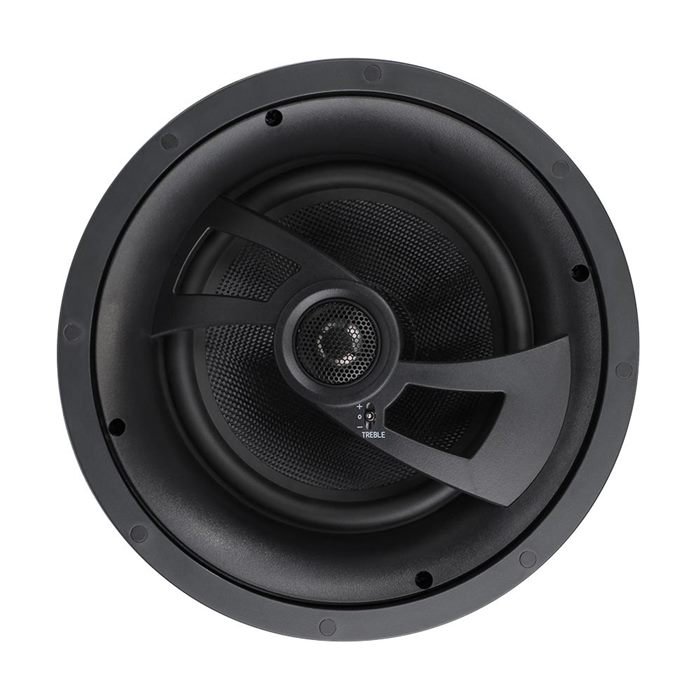
Why we picked it: Unlike a flat, direct-firing ceiling speaker, both the tweeter and 8" woofer here are pre-angled 15 degrees toward the listening position — Aperion specifically builds this one for Atmos-compatible home theaters rather than general whole-house audio. A titanium dome tweeter and a treble-adjustment switch round it out for a genuine in-ceiling height channel rather than a repurposed background speaker.
- Drivers: 1" titanium-dome tweeter, 8" woven-fiberglass woofer, both angled 15°
- Cutout: 10.08" round, 5.99" deep
- Best for: A true in-ceiling Atmos height channel
Priced and sold per speaker — a .2 or .4 height layer needs 2 or 4.