The best subwoofer for most home theaters is the SVS SB-1000 Pro: a 12" driver in a compact sealed cabinet, a 325W RMS amp, and app-based DSP tuning.
For a first sub on a budget, the Klipsch R-100SW (more options in our best budget subwoofers). If you want a Klipsch sub to match Reference speakers, the newer R-101SW (10") and R-121SW (12") are the current models. For large rooms and big action scenes, the Klipsch RP-1200SW's 800W amp has real headroom. Wherever you land, placement matters more than which sub you buy.
-
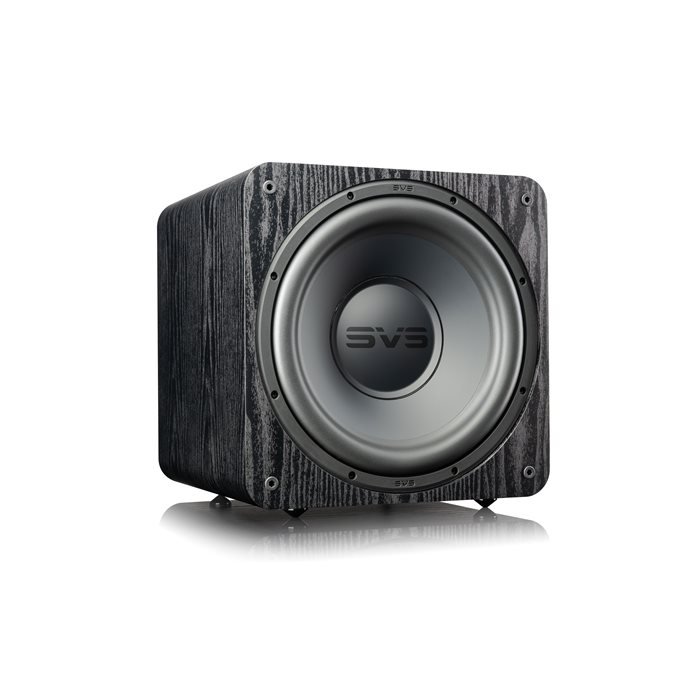 Best overallSVS SB-1000 ProCheck price at SVS
-
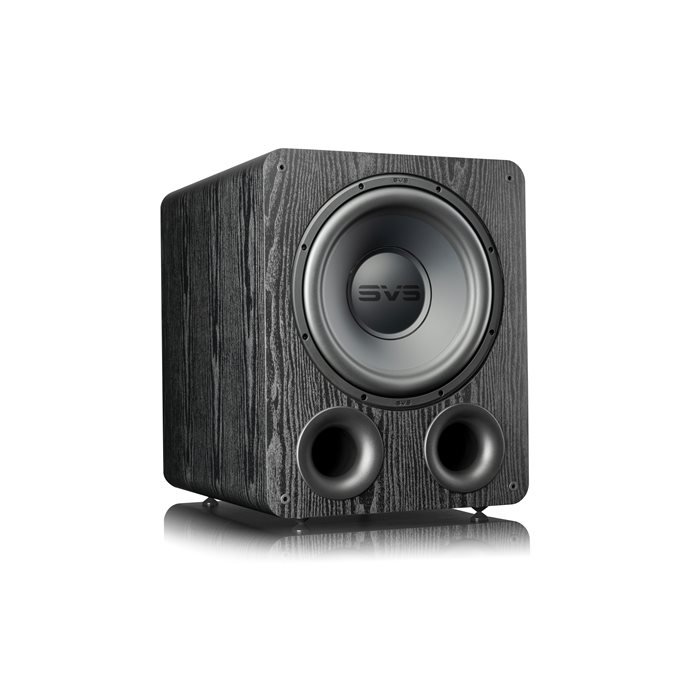 Best SVS for moviesSVS PB-1000 ProCheck price at SVS
-
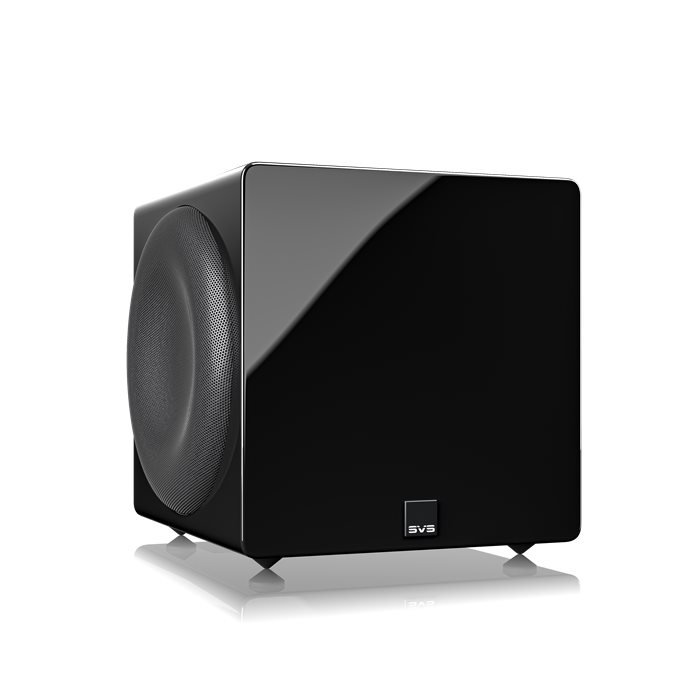 Best compact subwooferSVS 3000 Micro R|Evolution~$999 Check price at SVS
-
Best budgetKlipsch R-100SWCheck price on Amazon
Prices are approximate and change often. Tap a name to jump to the full write-up. Images: SVS.
The channel every other speaker relies on
Placement matters more than which sub you buy — see our subwoofer placement guide after picking one. Aperion's lineup below spans everything from an entry-level ported sub to an ultra-slim dual-15" cinema sub built to hide behind an acoustically transparent screen. Not sure what size you need? Try our Subwoofer Matcher.
Image: SVSWhy we picked it: A 12" driver in a compact sealed cabinet, backed by a genuinely powerful 325W RMS amp and an app for real DSP tuning — sealed subs also tend to blend more evenly into a room than ported designs of similar size.
- Driver: 12" high-excursion, sealed cabinet
- Amplifier: 325W RMS / 820W+ peak Sledge amp
- Control: SVS DSP smartphone app
Image: SVSWhy we picked it: The same 12" driver and 325W RMS amp as our top pick in a larger dual-ported cabinet, which SVS rates about 7 dB louder at 30 Hz. Choose it over the SB-1000 Pro for a bigger room or a movie-first system; the app's Sealed mode tightens it up for music. Full comparison: SB-1000 Pro vs. PB-1000 Pro.
- Driver: 12" high-excursion, dual front ports, 17–260 Hz
- Amplifier: 325W RMS / 820W+ peak Sledge amp
- Size: 18.9 × 15 × 20 in, 42.5 lb
Image: SVSWhy we picked it: The smallest SVS sub, for rooms where a normal subwoofer won't fit. Two 9" drivers fire out opposite sides of an 11-inch cube, which cancels cabinet vibration, and a 1,200W amp takes them to 20 Hz. It gets SVS's top-tier features too: balanced XLR input, six-band EQ, and Auto EQ room correction from the app. In a large room, the PB-1000 Pro moves more air for less money. See every SVS subwoofer compared.
- Drivers: Dual opposing 9" active drivers, sealed, 20–230 Hz
- Amplifier: 1,200W RMS / 4,000W+ peak
- Size: 10.9 × 11.8 × 10.8 in, 22.5 lb, piano gloss black or white
Why we picked it: A 10" spun-copper woofer and an all-digital amp deliver real weight for well under most subwoofer budgets — the obvious first sub for a 5.1 system that's currently missing one entirely. It's the older Reference sub: Klipsch's own store now sells the R-101SW and R-121SW below instead, but the R-100SW is still sold new on Amazon for far less.
- Driver: 10" front-firing spun-copper woofer
- Amplifier: 150W continuous / 300W peak, all-digital
- Cabinet: Bass-reflex, rear-firing port (leave space behind it)
- Controls: RCA/LFE input, adjustable bass controls
Why we picked it: Klipsch's current 10-inch Reference sub, with the same copper look as the Reference and Reference Premiere speakers. On paper it matches the R-100SW (150W, 10" driver), with a revamped spun-copper TCP woofer and a reinforced, newly braced ¾" MDF cabinet. It costs much more than the R-100SW, so buy it if you want the current model or a matched look; for about $50 more, the SVS SB-1000 Pro has a 12" driver and a bigger amp.
- Driver: 10" front-firing spun-copper TCP woofer
- Amplifier: 150W continuous / 300W peak, all-digital
- Cabinet: Bass-reflex, rear-firing port, 29.5–120 Hz
- Size: 14.6 × 14 × 19.7 in, 31 lb
Why we picked it: The 12-inch version: a bigger spun-copper woofer and a 200W amp, rated to 28 Hz and 118 dB max output (3 dB more than the R-101SW). A good fit for a medium living room with Klipsch Reference or Reference Premiere speakers. If you're not set on Klipsch, compare it with the SVS SB-1000 Pro and Aperion Daedalus DS10, which cost about the same.
- Driver: 12" front-firing spun-copper TCP woofer
- Amplifier: 200W continuous / 400W peak, all-digital
- Cabinet: Bass-reflex, rear-firing port, 28–120 Hz
- Size: 16.6 × 16 × 19.7 in, 35 lb
Why we picked it: A 12" high-excursion Cerametallic woofer and an 800W Class D amp give it real headroom for large rooms and bass-heavy action scenes — the step up once a 10" sub starts running out of gas.
- Driver: 12" front-firing high-excursion Cerametallic woofer
- Amplifier: 800W Class D
- Cabinet: Aerofoil front slot port for reduced turbulence noise
- Best for: Larger rooms or dedicated home theaters wanting reference-level output
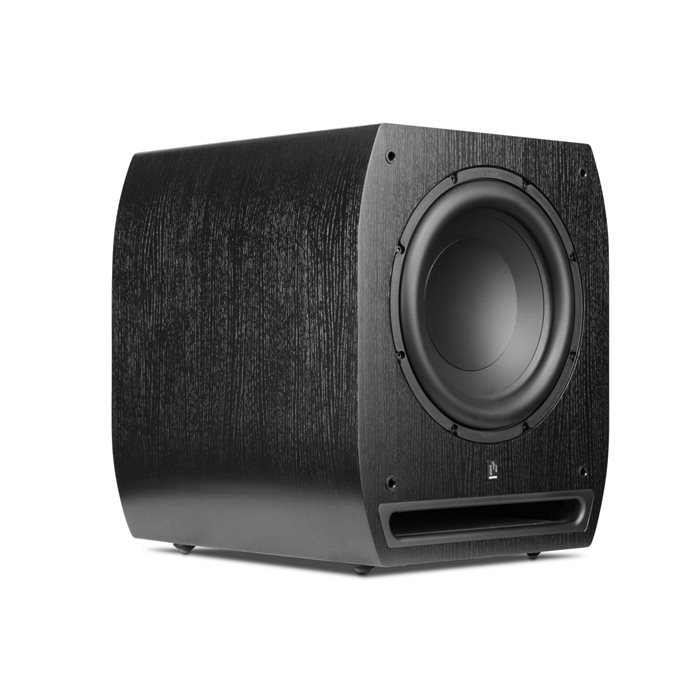 Image: Aperion Audio
Why we picked it: Aperion's smallest Daedalus: a 10" driver and 250W RMS Class D amp in a braced, front-ported cabinet, with a foam plug for sealed mode and RCA and balanced XLR inputs and outputs. It costs about the same as the SB-1000 Pro, and we compare the two in SB-1000 Pro vs. Daedalus DS10.
- Driver: 10" paper composite, front-ported (plug included), 20–195 Hz
- Amplifier: 250W RMS / 500W peak Class D
- Controls: Crossover 40–160 Hz or LFE, phase 0–180°
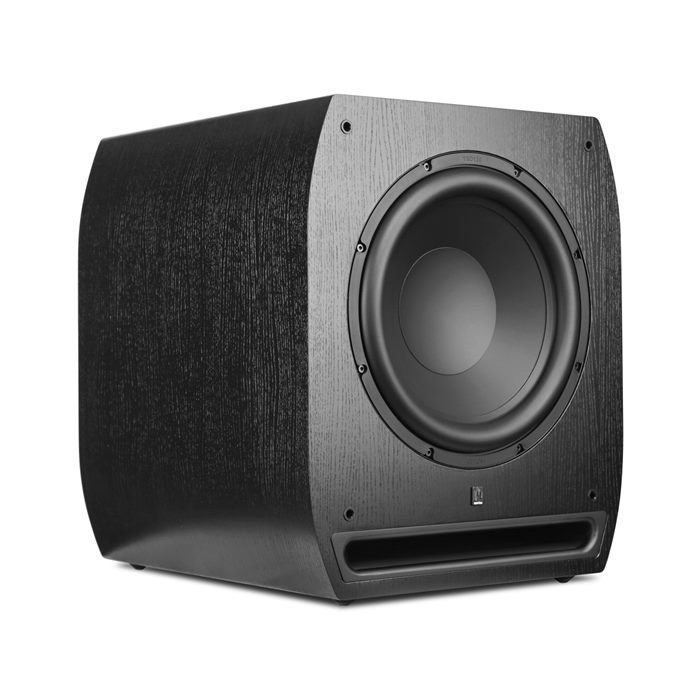
Why we picked it: A straightforward, well-built entry point into Aperion's own subwoofer lineup — a 12" high-excursion driver, a 250W/500W Class D amp, and both RCA and balanced XLR inputs most subs at this price skip entirely. A foam port plug lets you switch between ported (more output) and sealed (tighter, more accurate) response to match your room.
- Driver: 12" high-excursion, front-ported (switchable to sealed)
- Amplifier: 250W RMS / 500W peak Class D
- Connectivity: RCA and balanced XLR in/out, phase and crossover controls
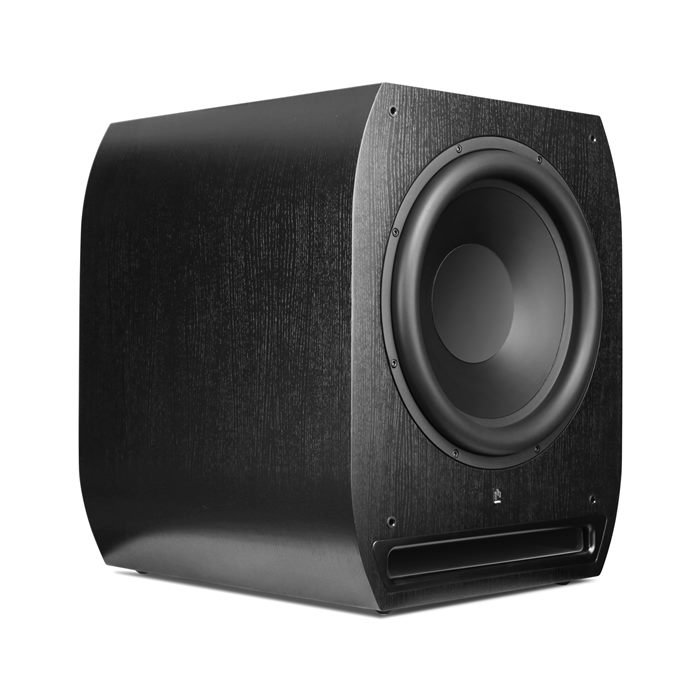
Why we picked it: Same design as the DS12, scaled up — a 15" driver and a 550W/1100W amp reach down to 18Hz, with the same switchable ported/sealed mode and RCA/XLR connectivity. The step up once a 12" sub starts running out of headroom in a larger room.
- Driver: 15" high-excursion, front-ported (switchable to sealed)
- Amplifier: 550W RMS / 1100W peak Class D
- Frequency response: 18Hz–195Hz
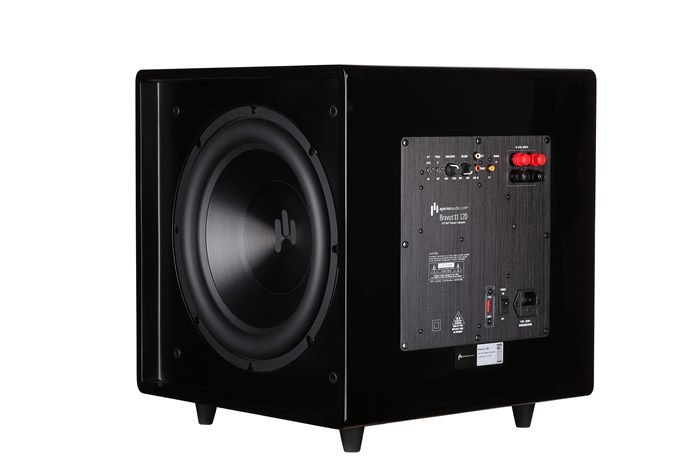
Why we picked it: A down-firing 12" active driver paired with dual 12" side-firing passive radiators packs real output into a sealed cabinet without the size of a comparably powerful ported design. A 650W amp and a sealed enclosure trade a little peak output for tighter, more controlled bass, and it's the only sub on this page available in gloss cherry or piano black instead of plain vinyl-wrap black.
- Driver: 12" active (down-firing) + dual 12" passive radiators
- Amplifier: 650W RMS / 1300W peak Class D, sealed enclosure
- Finish: Stealth Black, Gloss Black, Gloss Cherry, or Pure White
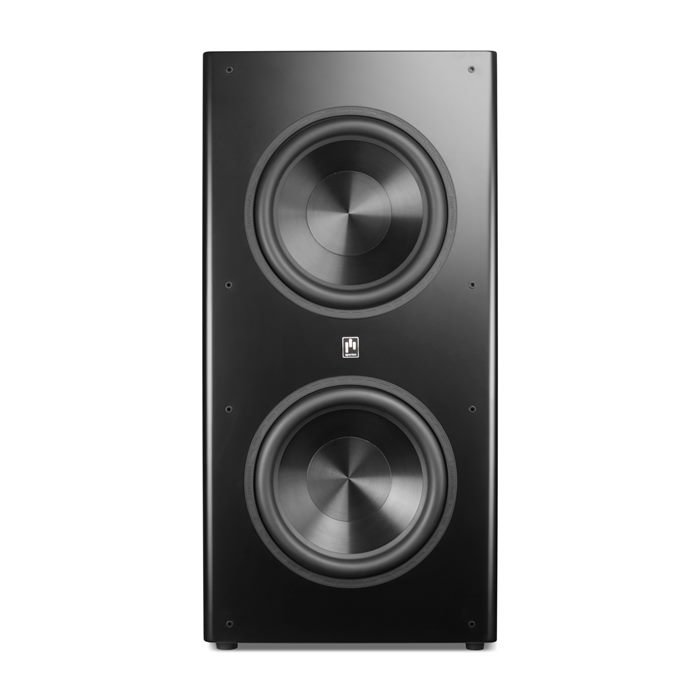
Why we picked it: Dual 15" aluminum-magnesium drivers and a 1,300W/2,600W ICEpower amplifier module put this in genuine reference territory, but the real trick is the cabinet — just 11.8" deep, purpose-built to sit flush behind an acoustically transparent projection screen without eating up floor space. Multi-sub capable with balanced XLR in/out for anyone running more than one.
- Driver: Dual 15" aluminum-magnesium alloy, sealed
- Amplifier: 1,300W RMS / 2,600W peak Class D ICEpower
- Depth: 11.8" — built for behind-screen placement
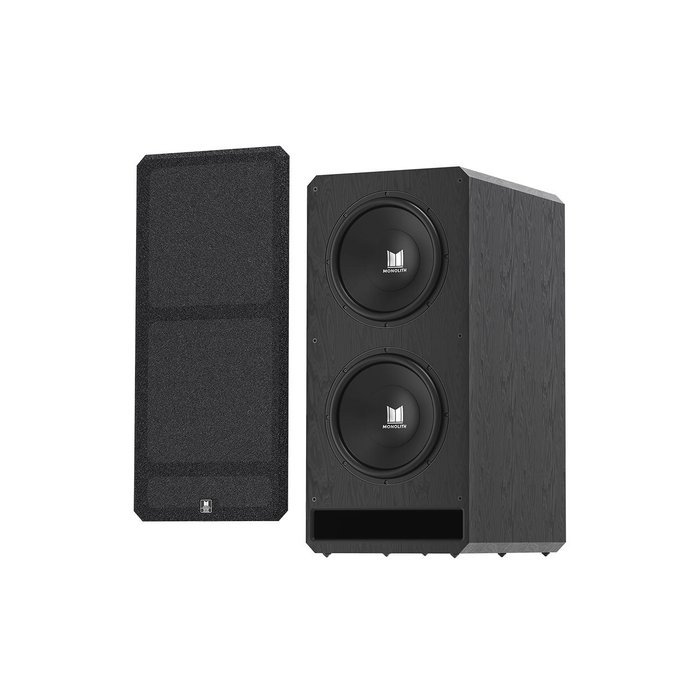
Why we picked it: Two 15" drivers, a 2,000W RMS amplifier, and a slot-vented cabinet make this the most bass per dollar on this page. It's THX Ultra certified, the top THX rating for subwoofers, and Monoprice rates it down to 14 Hz. It uses the same 15" driver as Monolith's single 15" THX Ultra sub, and Audioholics found its measurements of Monolith's THX subs closely matched Monoprice's published figures. Where the Aperion B215S above is built to hide behind a screen, the M-215 is built for raw output in a large room or dedicated theater. At 216 pounds and 42 inches tall, plan on helpers and floor space. It's sold new direct from Monoprice.
- Drivers: Dual 15" cones, slot-vented cabinet, 14–200 Hz (16 Hz to THX spec)
- Amplifier: 2,000W RMS / 3,600W peak, RCA and XLR inputs, XLR output
- Size: 27.6 × 20.0 × 42.3 in, 216 lb, black ash