A super tweeter sits on top of your speakers and adds extra treble above what your speakers' own tweeters cover. Here's what one actually does, who it helps, and how to choose and set one up.
Most people don't need one. Few adults hear much above 15 to 17 kHz, and any benefit comes from added output in the audible top octave, not above 20 kHz.
If you're curious, start with the Aperion PST (~$399 a pair). It's an easy 6-ohm load, and Aperion's 30-day audition lets you compare at home.
What is a super tweeter?
A super tweeter is a small add-on speaker that sits on top of your existing speakers and plays only the very highest frequencies. A typical tweeter is designed to reach about 20 kHz, the traditional upper limit of human hearing. A super tweeter takes over near the top of that range and extends it to 30 or 40 kHz.
It doesn't replace your speaker's own tweeter. Instead, it adds a little more energy in the top octave and, makers say, more "air" and a wider sense of space. It connects to the same amplifier channel as the speaker it sits on, so it doesn't need its own power.
Do you need a super tweeter?
Probably not, but some listeners like what one adds. Here's the honest picture:
- Most adults can't hear above about 15 to 17 kHz, and the upper limit drops with age. Frequencies above 20 kHz are beyond nearly everyone's hearing.
- Any benefit happens in the range you can hear. A super tweeter set to cross over at 8 to 12 kHz adds output where many speakers start to roll off or narrow their dispersion, and that can be audible as a brighter, more open treble.
- The effect is subtle, and it depends on your speakers, your room, and your ears. A darker-sounding speaker or a heavily furnished room is where a super tweeter is most likely to help.
If you're curious, the best approach is to try one at home. Aperion offers a 30-day in-home audition, so you can compare with the super tweeter switched off and on.
Aperion super tweeters compared
Aperion makes four super tweeters. All four have the same controls: a crossover you can set to 8, 10, 12, 14, or 16 kHz (or off), a 12 dB-per-octave slope, and a level control from 0 to -5 dB.
| Model | Driver | Range | Sensitivity | Impedance | Power | Price |
|---|---|---|---|---|---|---|
| PST | Planar-magnetic ribbon | 8–40 kHz | 94 dB | 6 ohms | 10–100 W | ~$399 a pair |
| RST | 3" aluminum ribbon | 8–40 kHz | 96 dB | 6 ohms | 10–100 W | ~$649 a pair |
| DST | Dual-firing AMT | 8–40 kHz | 96 dB | 4 ohms | 10–150 W | ~$999 a pair |
| HST | High-sensitivity dual-firing AMT | 8–30 kHz | 103 dB | 8 ohms | 10–250 W | ~$1,599 a pair |
Specs and prices are from Aperion's website when we checked. Aperion covers its super tweeters with a 3-year warranty.
The best super tweeters
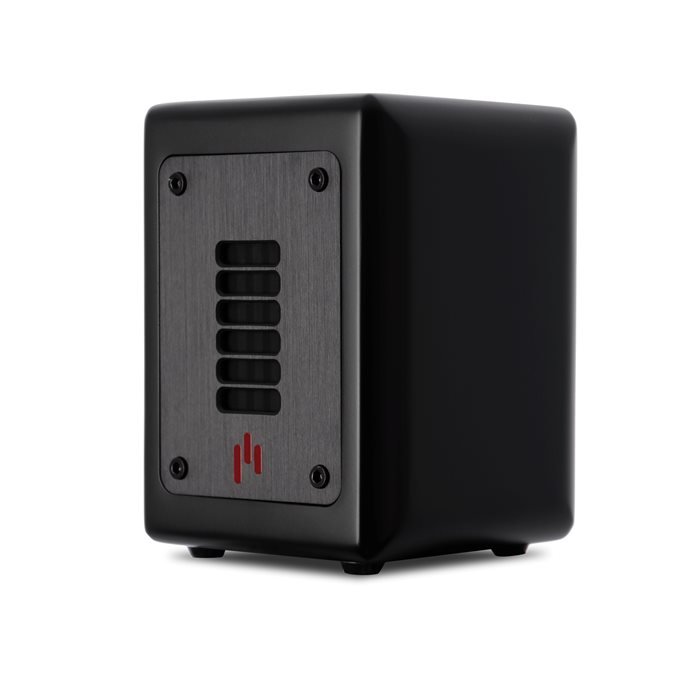 Image: Aperion Audio
The entry point and the easiest to try. It's a small planar-magnetic "flat ribbon" tweeter that sits on top of your speaker, with a crossover you can set to 8, 10, 12, 14, or 16 kHz (or off) and a level control from 0 to -5 dB. Its 6-ohm load and 94 dB sensitivity suit most bookshelf and tower speakers.
Check price at Aperion Audio Prices change often — verify current pricing on the Aperion site.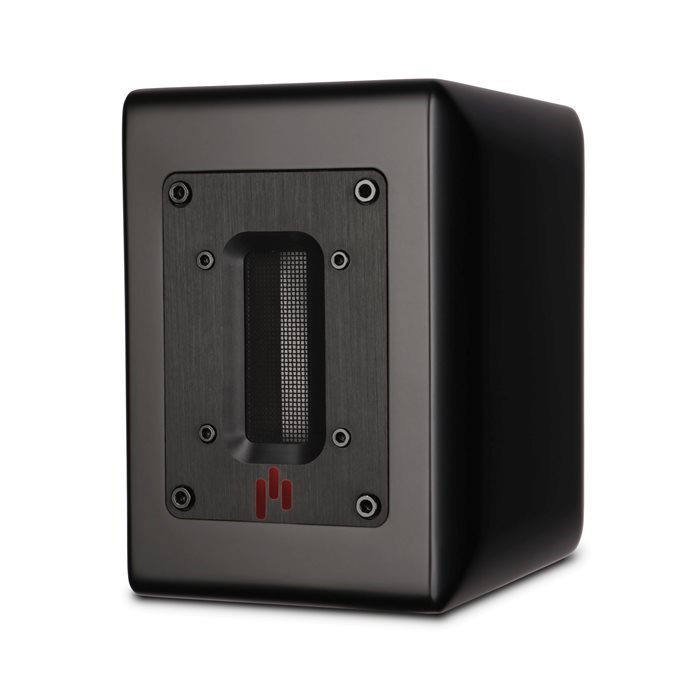 Image: Aperion Audio
Swaps the PST's planar driver for a 3-inch ultra-thin aluminum ribbon, with slightly higher 96 dB sensitivity. It has the same five crossover points and level control, and a larger, heavier cabinet (3.9 pounds each). It's the one to pick if you want a true ribbon tweeter.
Check price at Aperion Audio Prices change often — verify current pricing on the Aperion site.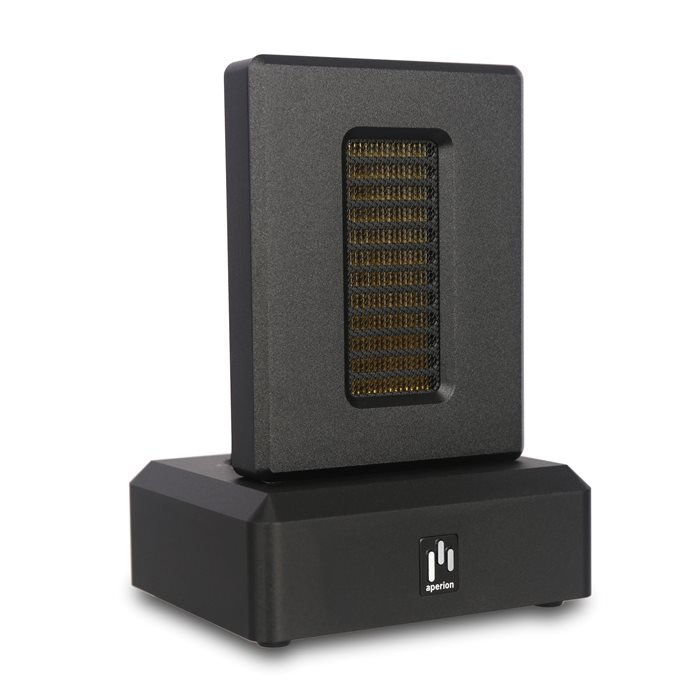 Image: Aperion Audio
Uses Aperion's dual-firing air motion transformer (AMT) driver instead of a ribbon, and it handles more power than the PST and RST. Worth knowing: it's the only 4-ohm model, so check that your amplifier is comfortable with the combined load.
Check price at Aperion Audio Prices change often — verify current pricing on the Aperion site.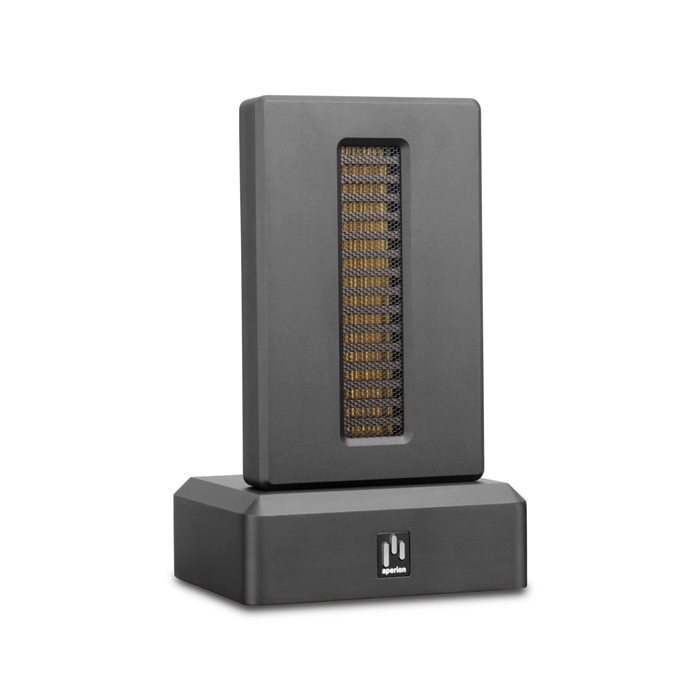 Image: Aperion Audio
A high-sensitivity version of the DST, rated at 103 dB. That makes it the right match for efficient speakers, such as horn-loaded designs, that would leave a 94 dB super tweeter sounding too quiet. Its 8-ohm load is also the easiest for an amp.
Check price at Aperion Audio Prices change often — verify current pricing on the Aperion site.How to match a super tweeter to your speakers
Match sensitivity first. Sensitivity tells you how loud a speaker plays from a given amount of power. Because the super tweeter runs from the same amplifier channel, it should be about as sensitive as your speaker, or a little more. The level control can only turn it down by 5 dB, so a super tweeter that's far more sensitive than your speaker will sound too bright. As a rough guide:
- Speakers rated about 85 to 90 dB (most bookshelf and tower speakers, including Aperion's Novus, Verus, and Grandis lines): the PST at 94 dB, or the RST or DST at 96 dB, with the level turned down.
- High-sensitivity speakers rated in the mid-90s or higher, such as many horn-loaded designs: the HST at 103 dB.
Then check the load. A super tweeter is wired in parallel with your speaker, so at the highest frequencies your amplifier sees both at once, and the combined impedance drops. That's rarely a problem with the 8-ohm HST or 6-ohm PST and RST. With the 4-ohm DST on top of a 4-ohm speaker, make sure your amplifier is comfortable with low-impedance loads. Our guide to speaker impedance explains why.
How to set up a super tweeter
- Place it on top of the speaker, lined up with the front baffle so its sound arrives at the same time as the sound from the speaker's own tweeter.
- Connect it to the same amplifier output as the speaker underneath, keeping positive to positive and negative to negative.
- Start high and quiet. Set the crossover to 16 kHz and the level to -5 dB. Lower the crossover a step at a time until you hear a difference, then raise the level only if you want more.
- Compare with it off. Use the off setting to switch between the two on music you know well. If you can't tell the difference, leave it at the highest setting you like, or return it within the trial.
Which super tweeter should you buy?
If you're curious, start with the Aperion PST (~$399 a pair). It's the least expensive, it suits most speakers, and its 6-ohm load is easy on an amplifier. Step up to the RST for a true aluminum ribbon, or the DST if your amplifier handles 4-ohm loads well.
If your speakers are very efficient, such as horn speakers rated in the mid-90s or higher, the HST (~$1,599 a pair) is the only one sensitive enough to keep up.