Twelve inches is the sweet spot for most home theaters: enough cone area to move real air in a medium room, in a cabinet that still fits beside a TV stand. Here are the nine 12-inch subs worth buying, from a budget pick to a furniture-grade Aperion, compared on the specs that matter.
For most people, buy the SVS SB-1000 Pro (~$599). It's a compact sealed sub with a 325-watt amp and app control, and it blends easily with music and movies in a small-to-medium room.
On a tight budget, the Dayton Audio CS1200 (~$240) gets you a ported 12-inch sub with a 200-watt RMS amp. For movies in a bigger room, step up to the ported PB-1000 Pro (~$849) or PB-2000 Pro (~$999).
-
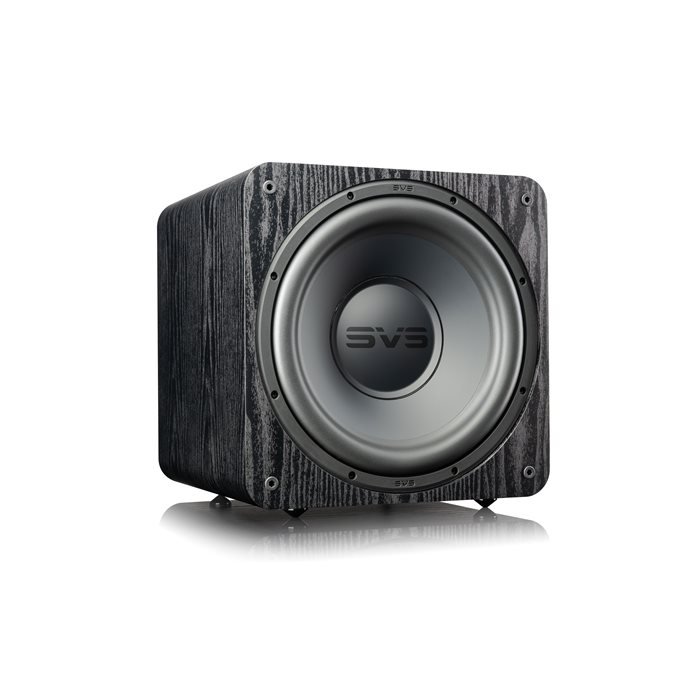 ~$599
Check price at SVS
- ~$240 Check price on Amazon
- ~$390 Check price on Amazon
-
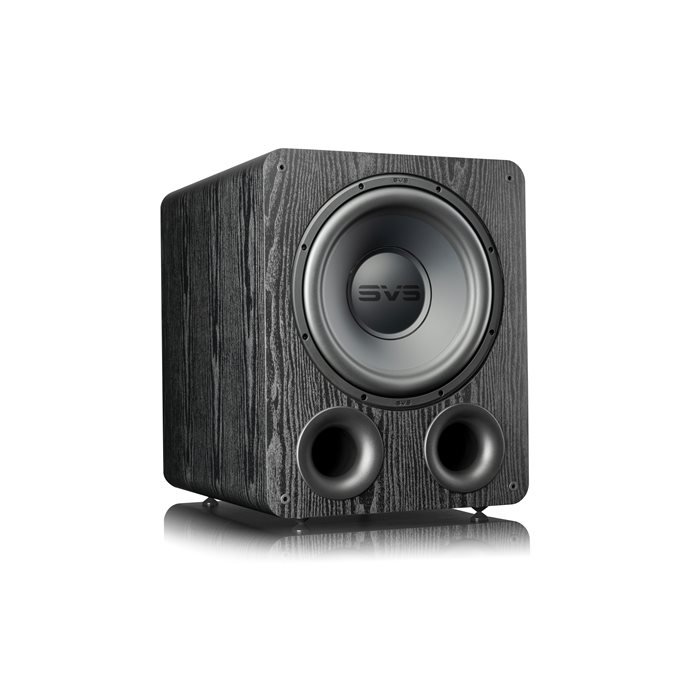 ~$849
Check price at SVS
-
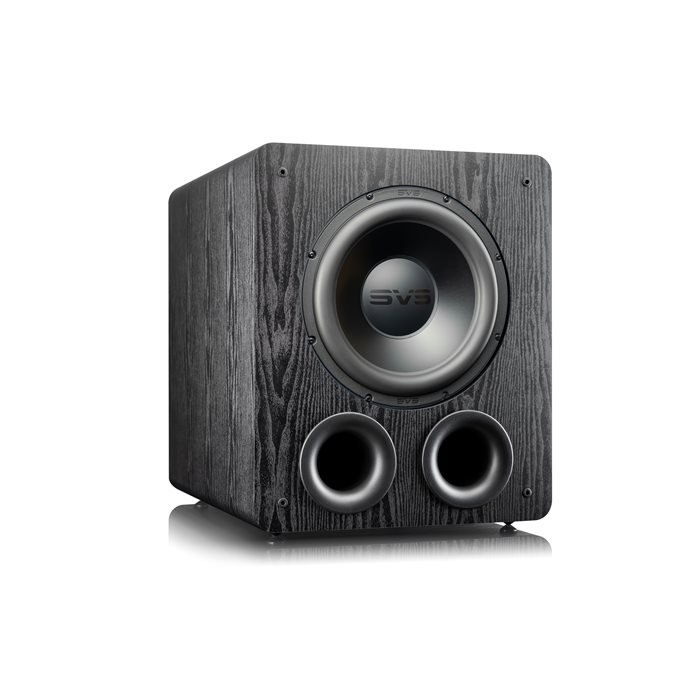 ~$999
Check price at SVS
Prices are approximate and change often. Tap a name to jump to the full write-up, or compare every pick in the specs table. Images: SVS.
The 12-inch subs at a glance
| Subwoofer | Cabinet | Amp (RMS) | Low end | Weight | Price |
|---|---|---|---|---|---|
| SVS SB-1000 Pro | Sealed | 325W | 20 Hz | 26 lb | ~$599 |
| Dayton Audio CS1200 | Ported | 200W | 26 Hz | 39 lb | ~$240 |
| Klipsch R-121SW | Ported (rear) | 200W | 28 Hz | 35 lb | ~$390 |
| SVS PB-1000 Pro | Ported | 325W | 17 Hz | 42.5 lb | ~$849 |
| SVS PB-2000 Pro | Ported | 550W | 16 Hz | 64.8 lb | ~$999 |
| SVS SB-2000 Pro | Sealed | 550W | 19 Hz | 38.6 lb | ~$749 |
| Aperion Daedalus DS12 | Ported or sealed | 250W | 19 Hz | 54 lb | ~$799 |
| Klipsch RP-1200SW | Ported | 400W | 16.5 Hz | 68.6 lb | ~$900 |
| Aperion Bravus II 12D | Sealed + passive radiators | 650W | 22 Hz | 51 lb | ~$1,299 |
Specs are from each maker's product page. Makers don't all measure low-end extension the same way, and not every spec sheet says how its number was measured, so treat that column as a rough guide rather than a ranking. Prices are approximate and change with sales.
The picks
Every sub here uses a single 12-inch active driver and was sold new when we checked. They're listed from the best fit for most people to more specialized picks.
Image: SVSA sealed 12-inch sub in a cabinet under 15 inches on every side, which makes it one of the easiest 12s to place. The 325-watt amp and sealed box favor tight, controlled bass that suits music as much as movies, and the SVS app sets volume, crossover, phase and a three-band EQ from your seat. It's also the top pick in our best subwoofers guide.
Worth knowing: in a large room, or at loud movie volumes, it runs out of headroom sooner than the ported PB-1000 Pro.
- Best for: Living rooms and medium rooms where you want a compact sub that suits music as much as movies.
- Choose instead if: You have room for a bigger box and watch mostly movies. The PB-1000 Pro uses the same driver and amp in a ported cabinet that plays louder in the deep bass.
A 12-inch mineral-filled paper cone and a 200-watt RMS amplifier (a continuous rating, not a peak number) in a ported cabinet that Dayton rates to 26 Hz, for well under half the price of the SVS. It has LFE and stereo RCA inputs, speaker-level inputs with pass-through for older stereo amps, a 40–160 Hz crossover, a 0/180° phase switch and auto-on, and Dayton backs it with a 5-year warranty. It's also the top pick in our budget subwoofer guide.
Worth knowing: it's a big box for the money at about 39 pounds, and there's no app or EQ. In a larger room it runs out of output before the bigger-amp subs further down. It comes in black or a wood finish.
- Best for: A first real subwoofer on a tight budget, including older stereo amps with no sub output.
- Choose instead if: You want app control and a smaller sealed cabinet. The SB-1000 Pro is a far easier box to place.
Klipsch's 12-inch Reference sub pairs a spun-copper woofer with a 200-watt continuous amp in a bass-reflex cabinet with a rear-firing port. Klipsch rates it to 28 Hz and 118 dB maximum output, 3 dB more than the 10-inch R-101SW. It's the natural match for Klipsch Reference or Reference Premiere speakers in a medium living room.
Worth knowing: the rear port needs some space behind the cabinet, and on paper it doesn't reach as deep as the SVS and Aperion subs here. For about $200 more, the SB-1000 Pro brings a bigger amp and app control.
- Best for: Klipsch Reference or Reference Premiere systems in a medium living room.
- Choose instead if: You want deeper rated bass for less. The Dayton CS1200 is rated to 26 Hz against 28 Hz, at about $150 less.
Image: SVSThe same 12-inch driver and 325-watt amp as the SB-1000 Pro in a larger dual-ported cabinet that SVS rates about 7 dB louder at 30 Hz. That's the range you feel in movie effects. The app's Sealed mode tightens it up for music. We compare the two in SB-1000 Pro vs. PB-1000 Pro.
Worth knowing: it's big for a 12-inch sub, its front ports need breathing room, and it only comes in black ash.
- Best for: Movie-heavy systems in small and medium rooms with space for a deeper cabinet.
- Choose instead if: Floor space is tight. The SB-1000 Pro has the same driver and amp in a cabinet under 15 inches on every side.
Image: SVSA 550-watt amp and a heavier driver motor than the 1000 Pro series, in a ported cabinet SVS rates to 16 Hz. It's the 12-inch sub here for a medium-to-large room or a dedicated theater. Like the PB-1000 Pro, it has a Sealed mode in the app for use with the ports plugged.
Worth knowing: at almost 24 inches deep and 65 pounds, it's a big box to place.
- Best for: Medium-to-large rooms and dedicated theaters.
- Choose instead if: You want the same 550-watt amp in a compact box. The SB-2000 Pro is sealed and under 16 inches deep.
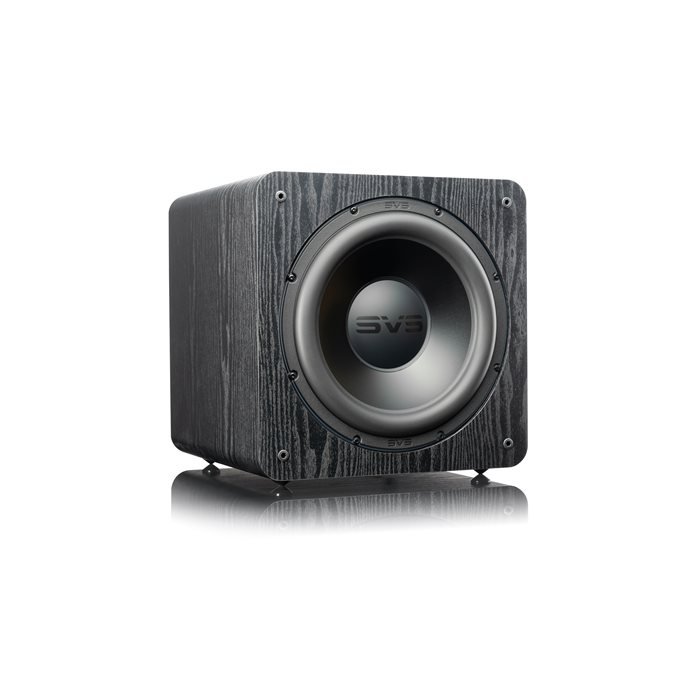 Image: SVS
Barely bigger than the SB-1000 Pro, but with a 550-watt amp (70% more power) and a stronger driver. It's the pick if you want a compact sealed sub with more headroom for a medium room or louder listening.
Worth knowing: it has no XLR input, and its app has three bands of EQ rather than the six on SVS's R|Evolution models.
- Best for: Medium rooms, or louder listening, where you want more headroom than the SB-1000 Pro without a bigger box.
- Choose instead if: You have the space and want deeper rated bass for movies. The PB-2000 Pro reaches 16 Hz in a ported cabinet.
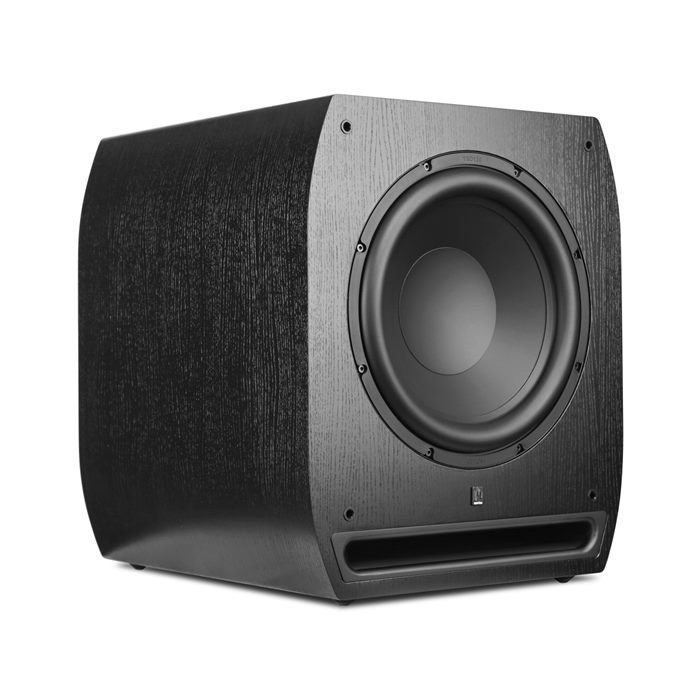 Image: Aperion Audio
Aperion's 12-inch sub comes with a foam port plug, so you can run it ported for more output or sealed for tighter bass, depending on your room. It has balanced XLR inputs and outputs as well as RCA, which few subs at this price include and which makes adding a second sub later straightforward.
Worth knowing: its 250-watt amp is smaller than the SVS subs' at similar prices. Aperion's warranty is 5 years on the cabinet and driver and 2 years on the amplifier.
- Best for: Aperion systems, rooms where you want to choose between ported and sealed, and anyone planning a second sub over XLR.
- Choose instead if: You want more amplifier power for the money. The SB-2000 Pro has 550 watts RMS against the DS12's 250, for about $50 less.
Klipsch's Reference Premiere 12-inch sub uses a high-excursion Cerametallic woofer and a 400-watt RMS amp (800 watts peak), and Klipsch rates it to 121 dB maximum output. It's built for a dedicated theater or a large room, works with Klipsch's optional WA-2 wireless kit, and Klipsch backs it with a five-year warranty.
Worth knowing: at nearly 26 inches deep and about 69 pounds, it's the biggest sub here. In a living room, a compact sealed sub is much easier to place.
- Best for: Large rooms and dedicated theaters built around Klipsch Reference Premiere speakers.
- Choose instead if: Your room is a medium living room. The R-121SW is the smaller Klipsch 12 at less than half the price.
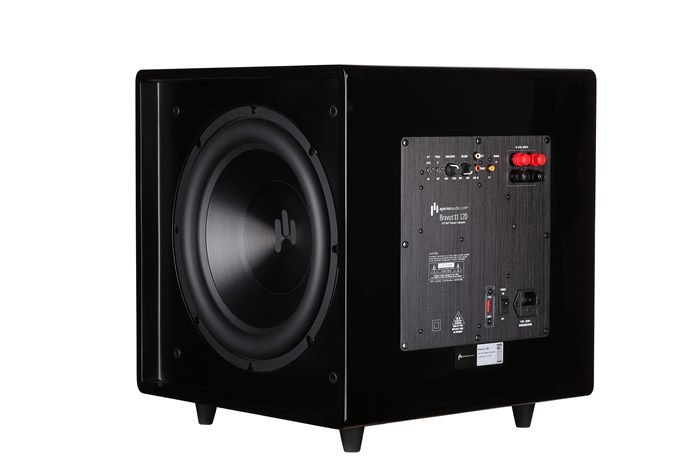 Image: Aperion Audio
A down-firing 12-inch driver and two side-firing 12-inch passive radiators in a sealed, braced cabinet, driven by a 650-watt amp. The passive radiators add low-end output without the size of a ported box, and it comes in four finishes, including gloss cherry and gloss black, instead of the usual plain black.
Worth knowing: it's the most expensive sub here, and it has line-level and speaker-level inputs but no XLR. Aperion's warranty is 5 years on the cabinet and drivers and 2 years on the amplifier.
- Best for: Living rooms where the sub has to look good, with gloss and wood finishes instead of plain black.
- Choose instead if: Looks matter less than value. The SB-2000 Pro is a compact sealed sub for about $550 less.
Is 12 inches the right size?
On paper, a 12-inch driver has about 44% more cone area than a 10-inch, so it can move more air at the same excursion. That's why 12s are the most common size for home theater: they play deeper and louder than 10s without the cabinet size and price of a 15. Driver size isn't everything, though. Amplifier power and cabinet design matter as much, which is why the 550-watt SB-2000 Pro has far more headroom than the 200-watt CS1200 even though both use a 12-inch driver.
- A 10-inch sub is often enough for a small room, an apartment, or a system built mainly for music. Our budget subwoofer and best subwoofer guides include 10-inch picks.
- A 12-inch sub fits most living rooms and small-to-medium home theaters.
- A 13- or 15-inch sub, or two 12s, makes sense for a large or open-plan room, or a dedicated theater where you listen loud. SVS's bigger models are in our SVS subwoofer guide.
Not sure what your room needs? Our Subwoofer Matcher suggests a sub for your room size and seating.
Sealed or ported?
Sealed subs, like the SB-1000 Pro and SB-2000 Pro, are smaller and give tight, quick bass that suits music. Ported subs, like the CS1200, R-121SW, PB-1000 Pro, PB-2000 Pro and RP-1200SW, use a tuned port to play deeper and louder in the bottom octave for the money, at the cost of a bigger cabinet. The DS12 can be either, thanks to its port plug, and the SVS PB models have a Sealed mode in the app for use with their ports plugged. The Bravus II 12D is sealed but adds two passive radiators for extra output. Our sealed vs. ported guide goes deeper.
One 12-inch sub or two?
Two subs placed apart in the room excite its standing waves differently, which evens out the peaks and dips so more seats get similar bass. They also add headroom. In a medium room, a pair of SB-1000 Pros (about $1,200) can be a better buy than one bigger sub at the same price. Many receivers have two or more subwoofer outputs (the Denon AVR-X3900H has four; see our X3900H vs. X4800H comparison). Our subwoofer placement guide shows where to put them, and the System Builder can plan a system with up to four subs.
How we chose
We don't run a test lab, and we didn't test these subwoofers in-house. Subwoofers usually aren't lab-tested by the big review sites, so we compared each maker's published specs (RMS amplifier power, rated low-end extension, cabinet type, size and weight, inputs and warranty), checked prices on Amazon and the makers' own stores, and kept only current 12-inch models sold new. See how we pick for the full process.