A headphone amp has one job: give your headphones enough clean voltage and current to play at the level you want. Your phone, laptop, and AV receiver already have a small one built in. Here's when that built-in amp falls short, a calculator that checks your own headphones and source, and how to hook up a separate amp, including from an AV receiver's Zone 2 output.
Most people don't need one. Earbuds, wireless headphones, and most easy-to-drive headphones play loud and clean from a phone dongle or a laptop.
You do need one for 250- and 300-ohm headphones like the Sennheiser HD 650 and HD 800 S, which need more voltage than a phone gives, and for low-sensitivity planar headphones, which need more current. An amp also fixes hiss from a noisy computer jack and lets you use wired headphones with a TV, a CD player, or an AV receiver's Zone 2 output.
Not sure? Put your headphones and source into the calculator below.
- What a headphone amp actually does
- Do you need one? A quick guide
- Will your source drive your headphones?
- Impedance and sensitivity, in plain English
- Output impedance and receiver headphone jacks
- How to hook up a headphone amp
- Using Zone 2 on a Denon receiver
- DAC, amp, or combo: which box do you need?
- Amps that match each setup
- Frequently asked questions
What a headphone amp actually does
Anything that plays sound through headphones does two jobs. A DAC (digital-to-analog converter) turns digital audio into a small analog signal, and an amplifier turns that signal into enough voltage and current to move the drivers. In a phone or laptop, both are tiny chips working on a battery-friendly power budget. A separate headphone amp does the second job with more voltage, more current, and usually less noise.
A better amp fixes three problems:
- Not enough volume. High-impedance headphones, like the 300-ohm Sennheiser HD 650, need more voltage than a phone or laptop usually puts out, so they sound quiet even at full volume.
- Strained, thin sound when you turn it up. When a source runs out of voltage or current, loud passages clip and distort, and the bass loses its grip. Low-impedance planars with low sensitivity, like the HiFiMan Arya Stealth and Dan Clark Audio E3, need plenty of current.
- Hiss and a changed tonal balance. Sensitive earbuds and IEMs reveal background hiss from noisy computer and console jacks, and a source with a high output impedance can change how headphones sound. A good amp has a low noise floor, a low output impedance, and gain settings to match your headphones.
What an amp doesn't do: once it has enough clean power and a low output impedance for your headphones, a well-designed amp shouldn't add a sound of its own. Past that point, more money buys features, inputs, and build quality rather than a big change in sound; new headphones change the sound far more. And an amp does nothing for Bluetooth headphones, which have their own DAC and amp built in.
Do you need one? A quick guide
| Headphones | Examples (maker specs) | Need an amp? |
|---|---|---|
| Earbuds and IEMs | Sennheiser IE 900 (16 ohms, 123 dB/V) | No. If you hear hiss, try a quieter source, or an amp on its lowest gain. |
| Wireless headphones | Sony WH-1000XM6, Apple AirPods Max 2 | No. They have their own amp inside. |
| Easy-to-drive full-size | Beyerdynamic DT 990 PRO X (48 ohms), Denon AH-D9200, Sennheiser HD 490 PRO, Focal Utopia | Usually not. A dongle or laptop gets them loud; an amp adds headroom. |
| 250- and 300-ohm dynamics | Sennheiser HD 650, HD 660S2, HD 800 S, DT 770 PRO 250-ohm | Yes. They need voltage: the HD 650 needs about 2.2 volts for 110 dB peaks, roughly twice what a typical phone dongle puts out. |
| Low-sensitivity planars | HiFiMan Arya Stealth (94 dB/mW), Dan Clark Audio E3 (90 dB/mW) | Usually. They need current: about 40 mW (Arya) to 100 mW (E3) for 110 dB peaks, more than a basic phone dongle supplies. |
| Sensitive planars | Audeze LCD-X (103 dB/mW) | Not for volume. They get loud from a laptop; an amp adds headroom. |
Neither impedance nor sensitivity tells the whole story on its own, which is why "do I need an amp?" has no one-number answer. The calculator below uses both.
Will your source drive your headphones?
Pick your headphones and your source, or choose "Other" and type in numbers from the spec sheets. The calculator works out the loudest peak your source can reach with those headphones, and the voltage and power it would take to reach your target.
Headphone figures are the makers' published impedance and sensitivity. Amp figures come from the makers' power ratings, converted to volts; between two ratings we use the lower one, so results never overstate an amp. For the DS2's balanced output we use the 170 mW rating on Fosi's product page. Phone and laptop outputs are rarely published and vary; many put out roughly 0.5 to 1 volt.
Not enough. Expect quiet, thin sound even at full volume. Get an amp that can deliver the voltage below.
To reach 110 dB, these headphones need about 2.2 volts (17 mW) into 300 ohms.
This source can deliver about 1.0 volts (3.3 mW) into 300 ohms.
Why aim for peaks around 110 dB? Music peaks can run 20 dB or more above its average level, especially in classical and other dynamic recordings, so a source that can reach about 110 dB on peaks will play nearly anything at a comfortable average level without running out of volume. Peak level isn't listening level, though. NIOSH's recommended workplace limit is an average of 85 dBA over eight hours, and every 3 dB louder halves the safe time.
Impedance and sensitivity, in plain English
Impedance, in ohms, is how much your headphones resist the signal. Higher-impedance headphones need more voltage for the same power, and lower-impedance headphones need more current. Sensitivity is how loud they play for a given input. You need both numbers to know whether a source can drive a pair.
Makers quote sensitivity two ways: in decibels per volt (dB/V) or per milliwatt (dB/mW). Sennheiser rates the HD 650 at 103 dB at 1 volt, and HiFiMan rates the Arya Stealth at 94 dB per milliwatt. To compare them, convert:
dB/V = dB/mW + 30 − 10 × log10(impedance)
Loudest peak = dB/V + 20 × log10(volts from your source)
The Arya works out to about 109 dB/V, so at the same voltage it actually plays louder than the HD 650. But at 32 ohms instead of 300, it draws almost ten times the current. That's the split in a nutshell: 300-ohm dynamics need an amp with voltage, and low-sensitivity planars need an amp with current.
If a spec sheet doesn't say which unit it uses, be careful: for headphones between about 10 and 100 ohms, a dB/V figure runs 10 to 20 dB higher than the dB/mW figure for the same headphones.
Output impedance, and why receiver headphone jacks fall short
Every source has an output impedance, a resistance in series with your headphones. A common rule of thumb is to keep it below an eighth of your headphones' impedance. Headphone impedance changes with frequency, so a high output impedance acts like an unwanted tone control: depending on the model, it can lift or cut parts of the bass and treble, and it lowers the volume. Good dedicated amps sit around 1 ohm or less; iFi lists the ZEN CAN 3's 6.35mm output at under 1 ohm.
Many AV receivers feed the headphone jack from the speaker amplifiers through resistors. That protects the amp and tames the level, but it gives the jack a high output impedance, often 100 ohms or more, and makers rarely publish it. 300-ohm headphones usually tolerate that better than low-impedance ones.
Using the jack also changes how the receiver behaves. On a Denon AVR-X3600H, plugging in headphones stops sound from the speakers and the pre-outs, and Audyssey MultEQ XT32 switches off. That's fine for late-night TV. For serious headphone listening, a dedicated amp on the receiver's Zone 2 pre-out skips the resistor-fed jack and gives your headphones their own amp and volume control.
How to hook up a headphone amp
From a computer or phone, a USB DAC/amp replaces the built-in jack:
- Computer or phoneSends digital audio over USB
- USB cableUSB DAC/ampZEN DAC 3, SK02, or a DS2 dongle
- Headphone cableWired headphonesPowered by the amp
From a TV or CD player, use its optical (or coaxial) digital output:
- TV or CD playerOptical or coaxial digital out
- Optical cableDAC/amp with optical inputZH3, SK02, or K5 Pro
- Headphone cableWired headphonesPowered by the amp
From an AV receiver, use Zone 2 instead of the headphone jack:
- AV receiverZone 2 pre-out (RCA)
- RCA cableAnalog headphone ampZEN CAN 3, or the ZH3's RCA input
- Headphone cableWired headphonesPowered by the amp
From a CD player's or turntable's analog output:
- CD player or turntableRCA analog out
- RCA cableAnalog headphone ampZEN CAN 3, or the ZH3's RCA input
- Headphone cableWired headphonesPowered by the amp
Using Zone 2 on a Denon receiver
Denon's AVR-X3600H manual spells out how Zone 2 handles audio, and the steps are similar on other recent Denon receivers:
- Connect it. Run a stereo RCA cable from the receiver's Zone 2 pre-out jacks to the headphone amp's RCA input.
- Pick Zone 2's input. Set it to Source to hear whatever the main zone is playing; in that mode, Zone 2 can play every type of input signal.
- If you choose a specific input instead, Zone 2 plays only analog audio or two-channel PCM from HDMI, optical, and coaxial inputs. For other HDMI audio, Denon says to set the receiver's HDMI Audio option to PCM, or set your player's audio output to PCM.
- Set the volume. Start with the headphone amp turned down, set Zone 2's volume on the receiver, then fine-tune with the amp's knob.
Other brands' Zone 2 outputs work much the same way, but which formats they pass varies, so check your receiver's manual.
DAC, amp, or combo: which box do you need?
| Your source | What it sends | What to buy | Examples |
|---|---|---|---|
| Computer or phone | Digital, over USB | DAC/amp combo with USB | iFi ZEN DAC 3, Fosi SK02, Fosi DS2 (dongle) |
| TV or CD player (optical or coaxial out) | Digital | DAC/amp combo with an optical or coaxial input | Fosi ZH3, SK02, K5 Pro |
| AV receiver Zone 2, CD player RCA out, phono preamp | Analog | Amp with an analog (RCA) input; no DAC needed | iFi ZEN CAN 3, or the Fosi ZH3's RCA input |
| Several of the above | Mixed | One box with every input, or an amp plus a DAC | Fosi ZH3 (USB, optical, coaxial, RCA), or a ZEN CAN 3 with a DAC in front |
Check the inputs before you buy. The ZEN DAC 3 takes only USB, so it can't connect to a receiver, TV, or CD player. The ZEN CAN 3 has no DAC, so it can't take USB or optical. For speaker setups and more hookup diagrams, see our guide to DACs and how to hook them up.
Amps that match each setup
These four cover the setups above. Prices and full reviews are in our best headphone amps guide.
It plugs into a computer over USB-C and powers itself from it. iFi rates its 6.35mm jack at about 210mW into 32 ohms and about 3.3 volts into 600 ohms, and its 4.4mm balanced output at more than 390mW into 64 ohms, enough to drive an HD 650 with headroom.
Worth knowing: USB-C is its only input, so it can't connect to an AV receiver, TV, or CD player.
Full write-up in our best headphone amps guide
Check price on Amazon Prices change often — verify current pricing on Amazon.An analog-only amp with RCA, 3.5mm, and 4.4mm balanced inputs, made for a receiver's Zone 2 pre-out, a CD or Blu-ray player's RCA outputs, or a phono preamp. iFi rates it at about 1,600mW into 32 ohms from the 6.35mm jack and more than 15 volts into 600 ohms balanced, with four gain settings.
Worth knowing: It has no DAC, so a computer, phone, or TV needs a DAC in front of it.
Full write-up in our best headphone amps guide
Check price on Amazon Prices change often — verify current pricing on Amazon.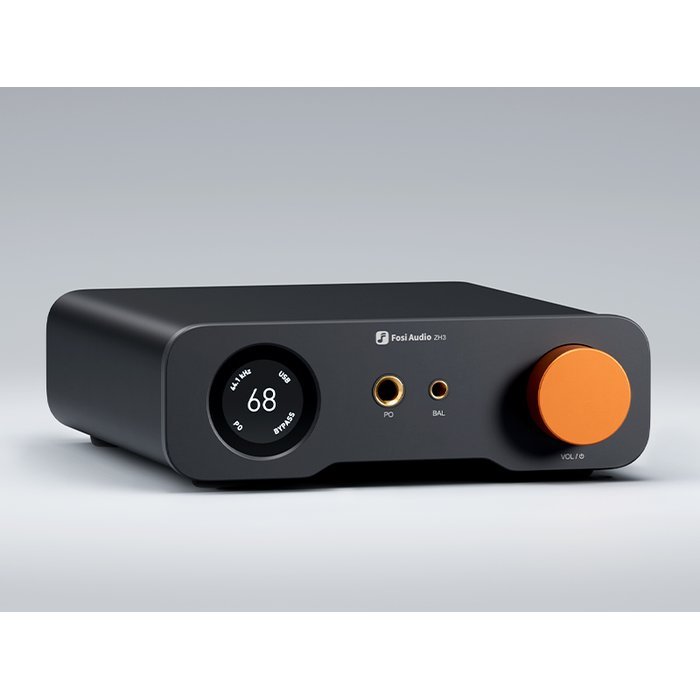 Image: Fosi Audio
USB, optical, coaxial, and RCA inputs in one box, so a computer, a TV, and a CD player or receiver can all stay connected. Fosi rates its 4.4mm balanced output at about 2.5 watts into 32 ohms and its 6.35mm jack at about 640mW, with three gain levels.
Worth knowing: It has no microphone input or Bluetooth, and it's more power than earbuds need.
Full write-up in our best headphone amps guide
Check price on Amazon Prices change often — verify current pricing on Amazon.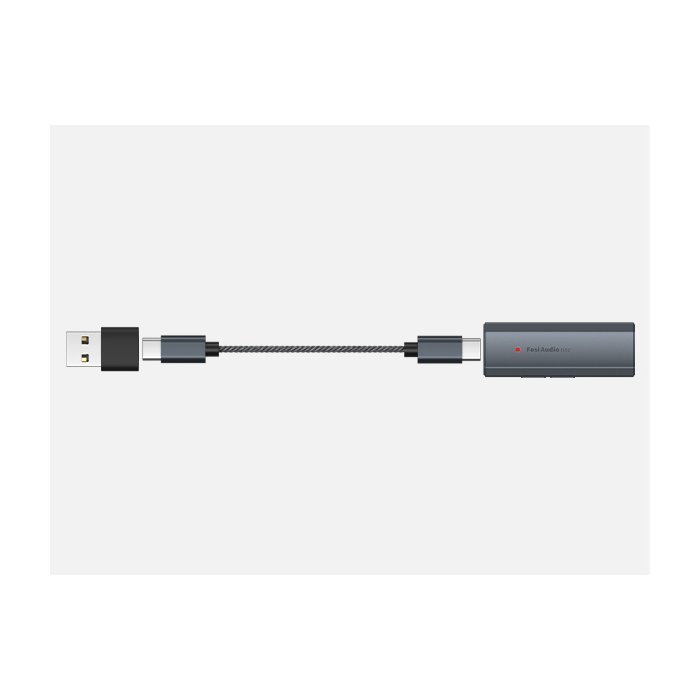 Image: Fosi Audio
A thumb-sized USB-C dongle with 3.5mm and 4.4mm balanced outputs. Fosi rates the 3.5mm output at about 128mW into 32 ohms, plenty for earbuds and most portable headphones.
Worth knowing: It runs off your phone's battery, and 300-ohm headphones and hard-to-drive planars are better off with a desktop amp.
Full write-up in our best headphone amps guide
Check price on Amazon Prices change often — verify current pricing on Amazon.